What Muslims Can Learn from Western Culture
Engage with confidence, benefit from what is good, and stay firmly grounded in your Islamic identity.
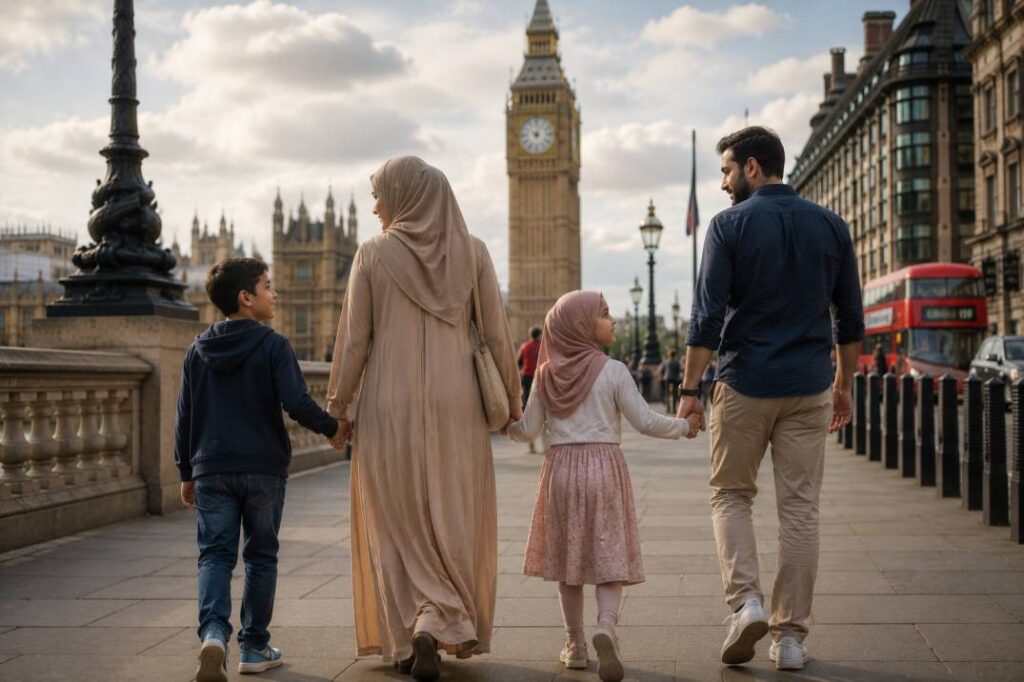
A Muslim living in the UK, USA, Canada, Australia, or another Western society can sometimes feel caught between two extremes. On one side is the fear that embracing anything from Western culture means compromising Islamic identity. On the other is the pressure to fully assimilate in order to feel accepted.
But Islam does not require either extreme. A Muslim can live confidently in a Western society, participate positively in its community, learn from its strengths, and benefit from its systems and knowledge — while remaining firmly grounded in Islam.
The real question is not “Should Muslims accept or reject Western culture?” It is: “What can I learn from the society around me without compromising what Allah has commanded me to preserve?”
This distinction matters for every Muslim in the West — and especially for parents raising Muslim children in a non-Muslim country. Islam gives us a clear framework for engaging with different cultures: seek beneficial knowledge, recognize good character wherever it appears, respect legitimate customs, and distinguish between what is merely cultural and what conflicts with Islamic principles.
At Sirat Academy, this balance is central to how we teach. Our goal is not simply to teach children Qur’an and Arabic, but to help them understand and live Islam with confidence, character, and purpose.
Does Islam Allow Muslims to Benefit from Other Cultures?
Yes. Islam does not require Muslims to reject beneficial knowledge, skills, or customs simply because they came from outside Muslim societies. The rule is to evaluate: accept what is beneficial and permissible, avoid what contradicts Islam, and use wisdom.
This principle runs throughout Islamic history. Muslim civilization did not develop in isolation. During the Islamic Golden Age, Muslim scholars translated and studied knowledge that originated in Greek, Persian, Indian, and other intellectual traditions. They did not simply copy what they found — they examined it, developed it, corrected it, and built upon it.
The same principle appears in the life of Prophet Muhammad ﷺ. During the Battle of the Trench, Salmān al-Fārisī suggested digging a defensive trench — a strategy associated with Persian military practice. The Muslims adopted the idea because it served a legitimate purpose.
The lesson is important: the origin of something does not automatically determine whether it is good or bad. A useful idea remains useful because it is useful. A harmful practice does not become acceptable simply because it is popular. And a neutral custom does not become forbidden merely because it developed in a non-Muslim society.
There is also a well-known narration describing wisdom as the “lost property” of the believer. This should be cited carefully: it was recorded by al-Tirmidhī and Ibn Mājah, and al-Tirmidhī himself graded it weak. So rather than leaning on that narration as a standalone proof, the stronger approach is the broader, well-established principle: Muslims should pursue beneficial knowledge and act with ḥikmah (wisdom) wherever they live.
Integration Is Not Assimilation
One of the most important distinctions for Muslims living in the West is the difference between integration and assimilation. They are not the same thing.
Integration
“I am Muslim, and I am also a responsible member of the society in which I live.”
Assimilation
“I must abandon important parts of my identity in order to belong.”
A Muslim can speak English fluently, study at a Western university, work professionally, volunteer, respect the law, pay taxes, use public institutions, learn modern scientific methods, appreciate organization, and build friendships with people from different backgrounds — and still pray five times a day, still fast Ramadan, still eat halal, still keep Islamic manners, still teach their children Qur’an, and still identify proudly as Muslim.
That is not a contradiction. It is simply the reality of being a Muslim in a multicultural society. Islamic identity does not require cultural isolation. At the same time, integration does not mean that every value around us should automatically become part of our lives. That is where discernment matters.
What Muslims Can Genuinely Learn from Western Culture
“Western culture” covers enormous differences between countries, cities, communities, generations, and individuals. So it is better to talk about specific practices and strengths a Muslim may encounter than to treat the West as one uniform thing. Here are seven areas where there is real benefit to be found.
1. Time Management, Punctuality & Respect for Time
Western workplaces, schools, and institutions tend to place a strong emphasis on punctuality and scheduling. Appointments have specific times, meetings begin at defined hours, deadlines are documented, and people are expected to arrive prepared.
For a Muslim, this is more than a professional skill. Time is an amānah (a trust). A disciplined approach to time makes Salah easier to organize, Qur’an study more consistent, family responsibilities clearer, and work more productive — and it teaches children responsibility. If a habit helps you honor something Islam itself values, there is nothing wrong with learning it.
2. Work Ethic, Organization & Systems
Strong organizations rarely rely on motivation alone. They build systems: procedures, checklists, training, documentation, clear responsibilities, and regular reviews. This is surprisingly valuable for Muslim families. Instead of only telling a child “you need to learn Qur’an,” parents can build a simple system:
This turns good intentions into consistent action. Sirat Academy follows the same philosophy — personalized learning, progress tracking, structured courses, and ongoing communication with parents — rather than treating Islamic education as occasional memorization. Good intentions matter; good systems help those intentions survive everyday life.
3. Respect for Institutions, Law & Civic Responsibility
Muslims in the West interact with schools, hospitals, councils, courts, libraries, universities, charities, and community organizations every day. Understanding how these work makes a Muslim a more effective member of society. Civic responsibility can include:
- Following legitimate laws and respecting public spaces
- Voting where it legally applies and participating constructively
- Reporting genuine problems through the proper channels
- Helping vulnerable neighbors and respecting others’ rights
Being a good Muslim is not limited to what happens inside the mosque. Your character also shows in how you treat your neighbor, colleague, teacher, and customer. A strong Islamic identity should produce responsible citizens, not isolated individuals.
4. Scientific Method, Research & Educational Standards
Muslims have a remarkable intellectual heritage — contributions to mathematics, medicine, astronomy, optics, and geography. The Golden Age itself showed that Muslim scholars could learn from other civilizations and then build on that knowledge. Today, a Muslim student can continue that tradition by learning how to formulate a research question, evaluate evidence, distinguish evidence from opinion, reference sources, and challenge assumptions.
These are intellectual skills, and they belong to no single civilization. A Muslim can learn the scientific method without abandoning Islam. In fact, a serious commitment to knowledge should make Muslims more curious, more rigorous, and more intellectually confident.
5. Volunteering, Community Service & Organized Charity
Western countries have extensive infrastructures for volunteering. When the activity itself is permissible, a Muslim can take part — at a food bank, a community clean-up, a local charity, a hospital support program, or a fundraiser. A Muslim teenager who volunteers is not becoming “less Muslim.” They may be learning to translate Islamic values — generosity, mercy, responsibility, care for others — into action. The goal is never “my child looks like everyone else,” but “my child knows how to be a Muslim who benefits everyone around them.”
6. Consumer Rights, Honesty & Accountability
Many Western systems are designed to protect people: receipts are expected, contracts are documented, refund policies are clear, complaints can be filed, and businesses can be held to account. There is a valuable lesson here, because Islam places enormous weight on honesty in trade and on fulfilling agreements. A Muslim business owner should never think “nobody will notice” — the reality is always “Allah knows.” Modern accountability systems can reinforce an Islamic principle rather than compete with it.
7. Cleanliness, Public Order & Environmental Responsibility
Consider simple habits: putting rubbish in bins, recycling, keeping public spaces clean, following queues, respecting traffic rules, avoiding unnecessary noise, and caring for shared spaces. These look like small cultural habits, but small habits shape character. A Muslim should not behave well only when someone is watching — good Islamic character should appear in public exactly as it appears at home. This matters most when raising children, because children learn identity not only from what parents say Islam is, but from what they see parents do.
What Should Muslims Approach with Caution?
A balanced discussion cannot stop at the benefits. Not everything popular in a Western society is good for a Muslim — but the answer is not to label everything Western as harmful either. Instead, Muslims need a filter. A useful starting point is three questions.
Question 1: Is this simply a neutral custom?
Clothing styles that meet Islamic requirements, forms of home decoration, halal food preferences, workplace communication styles — these may just be matters of culture. Islamic jurisprudence recognizes the role of ʿurf (accepted custom) in matters where custom legitimately applies, provided it does not contradict clear Islamic principles.
Question 2: Is this genuinely beneficial?
Ask: does this improve my life without violating Islamic principles? Better organization, professional training, educational techniques, public cleanliness, scientific research, community service, financial documentation, time management — if something is beneficial and permissible, there is no reason to reject it just because it comes from another culture.
Question 3: Does this conflict with a clear Islamic value?
This is where caution becomes necessary. If a practice directly contradicts a clear Islamic obligation, prohibition, or fundamental ethical principle, its popularity does not make it acceptable. This is exactly why ʿurf is not an unlimited principle — Islamic legal discussions distinguish between legitimate customs and customs that conflict with definitive rulings. So the goal is never simply “reject Western culture” nor “accept Western culture.” The goal is to evaluate it: keep what is beneficial, leave what is harmful, and ask a qualified scholar when the situation is complicated.
A Simple Muslim Filter for Western Culture
When you meet a new idea, habit, trend, or social practice, run it through five quick steps.
The fifth step is the most powerful: can I adopt the benefit without adopting the worldview? You can learn punctuality without adopting another religion. You can learn scientific research without abandoning revelation. You can volunteer without abandoning Islamic identity. You can speak excellent English without losing Arabic. Learning a skill is not the same as surrendering your identity.
How Can Muslims Keep Their Identity While Living in the West?
Confidence comes from knowing what you believe. A Muslim who was never taught why Islam matters may experience every cultural difference as a threat. But a Muslim with strong knowledge can engage calmly and say: “I know what I believe. I understand why I practice Islam. I can appreciate what is good here without needing to become someone else.”
This is especially true for children. If a child only ever hears “don’t do that, it’s Western,” they will eventually ask “why?” — and if parents cannot give a meaningful answer, the child may look elsewhere for one. This is one of the quiet reasons so many Muslim children drift away from their Islamic identity while growing up in the West. A stronger approach is to teach the principles behind the faith:
- Instead of “we don’t celebrate that,” explain the Islamic worldview behind it
- Instead of “don’t dress like them,” teach modesty, dignity, and self-respect
- Instead of “don’t listen to them,” teach children how to evaluate ideas
- Instead of “Islam is different,” teach that Islam gives them a framework for understanding the whole world
That difference is enormous — and it is the heart of building a strong Islamic identity in children that can withstand any environment.
Raising Confident Muslim Children in a Western Society
Parents raising children in the West cannot realistically remove every cultural influence from their children’s lives — and they do not need to. The better goal is to raise children who can navigate the environment confidently. A child should be able to walk into a Western school without feeling ashamed of being Muslim, explain why they pray, understand why they eat halal, know why Ramadan matters, recognize Islamic manners, understand their identity — and still interact respectfully with people who believe differently.
That requires more than memorization. It requires tarbiyah — nurturing the child gradually by building faith, knowledge, character, habits, and emotional confidence. This is also why teaching Islamic values to children should answer not only “what do Muslims do?” but also “why do we do it?”
Sirat Academy’s Islamic Studies program is built on exactly this principle, covering Fiqh, Aqeedah, Seerah, Hadith, Tafsir, Islamic manners, identity, and character — so the aim is not children who can merely repeat information, but Muslims who understand their religion and can live it with confidence.
You Don’t Have to Choose Between Islam and Success
One of the most damaging assumptions a Muslim child can absorb is: “If I want to succeed in the modern world, I have to become less Muslim.” That is a false choice. Islam does not teach Muslims to abandon excellence. A Muslim can be academically ambitious, professionally disciplined, scientifically curious, entrepreneurial, organized, community-minded, respectful, and confident in communication — and deeply committed to Islam at the same time.
The objective is not to raise children disconnected from the society around them. It is to raise children who can navigate that society without losing themselves. That is a much stronger form of identity.
The Goal: Confident Muslims, Not Isolated Muslims
The healthiest relationship with Western culture is neither blind acceptance nor automatic rejection. It is conscious engagement: learn, evaluate, benefit, contribute, protect your faith, and stay anchored to Allah. A Muslim does not need to fear every useful idea because it came from outside a Muslim-majority country — and does not need to accept every social value because it is popular. The question is always the same:
Does this help me become a better human being and a better servant of Allah — without contradicting His guidance?
For parents, this balance matters even more. Our children will grow up surrounded by ideas, cultures, and technologies previous generations never faced. We cannot prepare them by building a wall around them. We prepare them by building something stronger inside them: faith, knowledge, character, and confidence. That is the foundation of a Muslim identity strong enough to live anywhere.
Frequently Asked Questions
No. “Western culture” is far too broad to label as entirely compatible or incompatible with Islam. Western societies contain beneficial practices, neutral customs, and some ideas that conflict with Islamic teachings. A Muslim should evaluate each practice on its own merits according to Islamic principles — accepting what is beneficial and permissible and leaving what is harmful — rather than accepting or rejecting an entire civilization.
Yes. Muslims can adopt permissible customs and practices from any society. Islamic jurisprudence recognizes the role of ʿurf — accepted custom — in matters where custom legitimately applies, provided it does not contradict clear Islamic principles. Punctuality, professional organization, and civic manners are good examples of neutral or beneficial customs a Muslim can embrace freely.
A Muslim living in a non-Muslim country should remain committed to their faith while fulfilling legitimate responsibilities toward the society they live in — respecting lawful obligations, treating neighbors and colleagues well, contributing positively, and maintaining worship and Islamic values. Specific questions about residence, contracts, employment, or particular situations can vary and should be referred to a qualified scholar.
Build identity through knowledge, worship, family life, good companionship, structured Islamic education, and positive community involvement. Children especially need to understand why Islam matters rather than simply receiving a list of restrictions. Confidence comes from understanding, not isolation.
Not by building a wall around them, which is rarely realistic and often backfires. A more sustainable approach is to teach children how to evaluate what they encounter — to recognize what is beneficial, what is simply cultural, and what conflicts with Islamic principles. This develops lasting discernment rather than fear.
Yes. Muslims can benefit from useful knowledge, skills, and practices regardless of who developed them, as long as the specific practice is permissible and beneficial. Islamic history itself is full of examples — during the Golden Age, Muslim scholars studied and built upon Greek, Persian, and Indian knowledge rather than rejecting it because of its origin.
Give them a strong foundation in Qur’an, Arabic, Islamic knowledge, worship, and manners, and pair it with communication skills, critical thinking, and respectful engagement with people of other backgrounds. The goal is not to make children afraid of the world — it is to make them strong enough to navigate it.
Raise a Confident Muslim in a Western World
If you want your child to grow up with strong Islamic knowledge, character, and identity while living in a Western society, Sirat Academy is here to support your family. Our teachers are Al-Azhar graduates and native Arabic speakers, and our live online classes are designed for children, teenagers, and adults at every level.
Start With 2 Free Trial Classes →