Raising Muslim Kids in the West
Building a Strong Islamic Identity in Children: A Parent’s Age-by-Age Guide

“Train up a child in the way he should go…”
For Muslim parents, this means far more than teaching Islamic facts or memorizing Qur’an. It means raising children who love Allah, feel proud to be Muslims, and carry their faith with confidence wherever they go.
This challenge is especially important for families living in Western societies, where children are constantly exposed to different beliefs, values, and influences. The good news is that a strong Islamic identity isn’t built overnight—it grows gradually through love, guidance, and meaningful experiences at every stage of childhood. If you’ve ever worried about your child drifting, it helps to first understand why Muslim children lose their Islamic identity.
In this guide, you’ll discover how to nurture your child’s Islamic identity from ages 3 to 18.
Key Takeaways
- A strong Islamic identity grows in stages—match your approach to your child’s age, not a fixed rulebook.
- Ages 3–6: Lead with love. Make Allah feel warm and near before introducing rules.
- Ages 7–10: Build consistent daily habits—the prayer years—through teaching, never forcing.
- Ages 10–14: Welcome every question and explain the wisdom behind Islam.
- Ages 15–18: Guide through good companionship and trust, shifting from instructor to mentor.
What Is Islamic Identity?
Islamic identity is a child’s deep sense of belonging to Allah, love for Islam, and confidence in living as a Muslim—regardless of where they live or what challenges they face.
A child with a strong Islamic identity doesn’t simply know Islamic rules. They understand why they believe, feel connected to their faith, and are proud to practice it with sincerity and confidence. This is the heart of raising Muslim kids in a non-Muslim country.
The Three Foundations of a Strong Muslim Identity
Before we go through the foundations, our kids should know and believe that Islam is their way to live in happiness and peace.
“Islam is a religion for life and after life.”
Let’s go now to the foundations.
The three foundations that hold up a child’s Islamic identity.
1. Self-Worth Through Allah
Children should know that their value comes from being servants of Allah—not from popularity, appearance, or social media approval.
2. Confidence to Be Different
Islam teaches children that doing what is right matters more than fitting in. Help them see that being different for the sake of Allah is a strength, not a weakness.
3. A Sense of Belonging
Children thrive when they feel they belong to a loving Muslim family, a supportive community, and the global Ummah.
The Principle That Changes Everything: Connection Before Correction
One of the greatest parenting mistakes is correcting behavior before building connection.
Children are far more likely to accept guidance from parents who make them feel loved, understood, and safe. Before teaching rules, build relationships. Before correcting mistakes, strengthen trust.
The Prophet Muhammad ﷺ was the perfect example of leading with mercy, kindness, and wisdom.
A note for parents of teens
For teenagers, it is often better to provide a trusted mentor—this rule may be difficult to apply through parents alone. If you need support choosing the right mentor or teacher for your son or daughter, we can help.
How Islamic Identity Develops
As children grow, their emotional and spiritual needs change. Your parenting approach should grow with them. Across the four stages below, the focus shifts from love, to routine, to reasoning, and finally to companionship.
One focus per stage: Love → Routine → Reasoning → Companionship.
Parent focus
Help them love Allah before asking them to obey Him.
Ages 3–6: The Fiṭrah Years — Planting Love
What’s Happening?
- They learn through observation.
- They imitate family members.
- They connect emotions with experiences.
Activities to Try
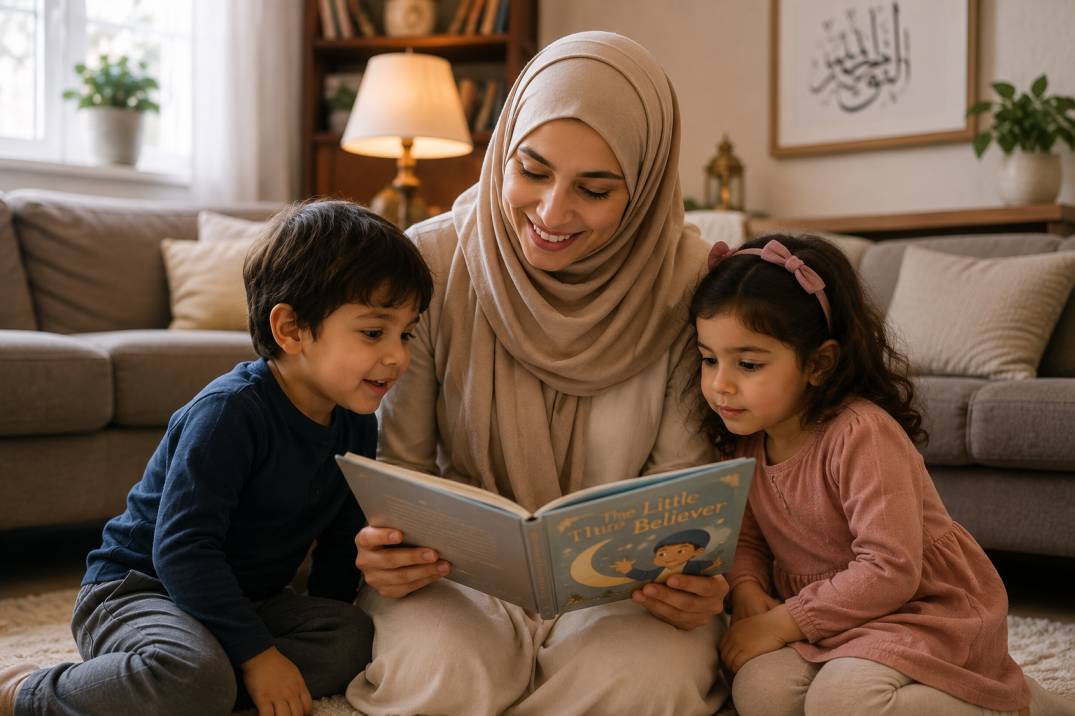
- Read simple stories about the Prophets.
- Let them join family prayer without pressure.
- Listen to Qur’an together.
- Celebrate Ramadan and Eid with excitement.
- Teach short duas during daily routines.
Simple Daily Phrases
- “Allah loves kind people.”
- “Let’s thank Allah for this food.”
- “Masha’Allah! Allah gave you a beautiful smile.”
What to Avoid
- Scaring children with punishment.
- Long lectures.
- Forcing acts of worship they don’t understand.
At this stage, your goal is simple: help your child love Allah before asking them to obey Him.
Ages 7–10: The Habit Years — Building Routines
The Prophet ﷺ instructed parents to teach children to pray at the age of seven. This stage is about developing consistent habits.
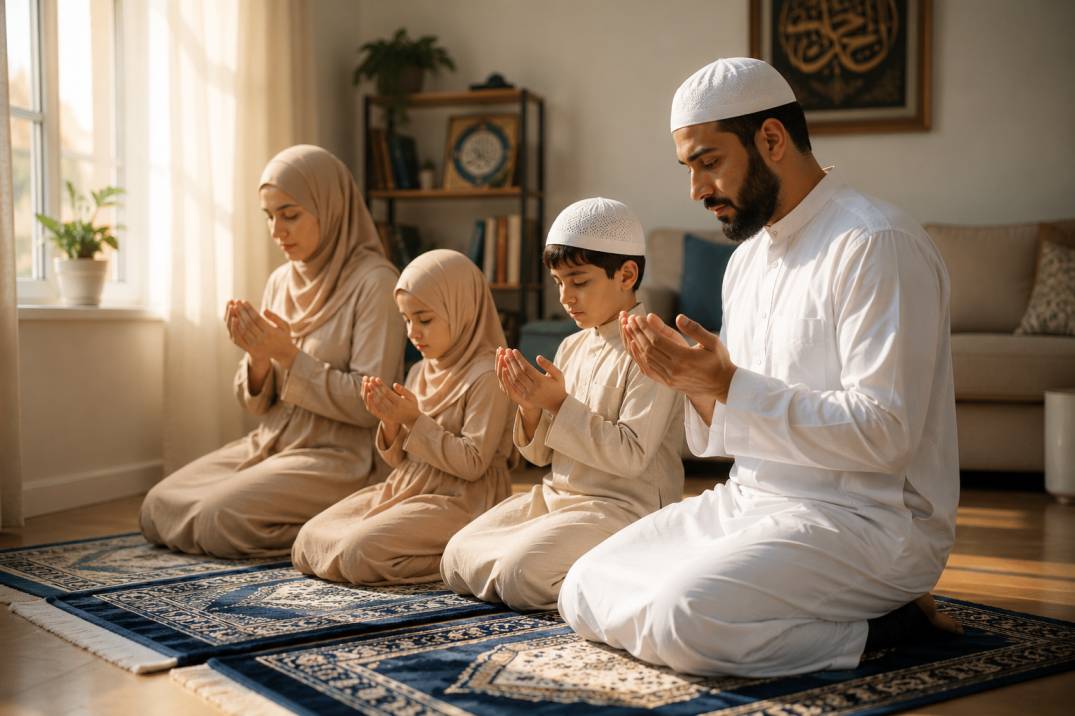
“Teaching only, without any forcing.”
What’s Happening?
Children begin understanding responsibility and routines.
Habits to Build
- Pray together as a family.
- Read Qur’an for a few minutes every day.
- Give small amounts of charity together.
- Attend the masjid regularly.
Conversations to Start
Ask questions such as:
- “Why do you think we pray?”
- “What blessing are you thankful for today?”
Encourage thinking rather than memorizing answers.
What to Avoid
- Using prayer as a punishment.
- Comparing siblings.
- Expecting perfection.
Ready to help your child build consistent Islamic habits?
At Sirat Academy, our experienced teachers make Qur’an, Islamic Studies, and Arabic enjoyable through engaging online lessons that children look forward to attending. Start with two free trial lessons and discover how enjoyable Islamic learning can be.
Book 2 Free Trial Lessons →Ages 10–14: The Questioning Years — Meaning and Belonging
As children enter adolescence, they begin asking deeper questions.
This is healthy. Questions are signs of growth—not rebellion.
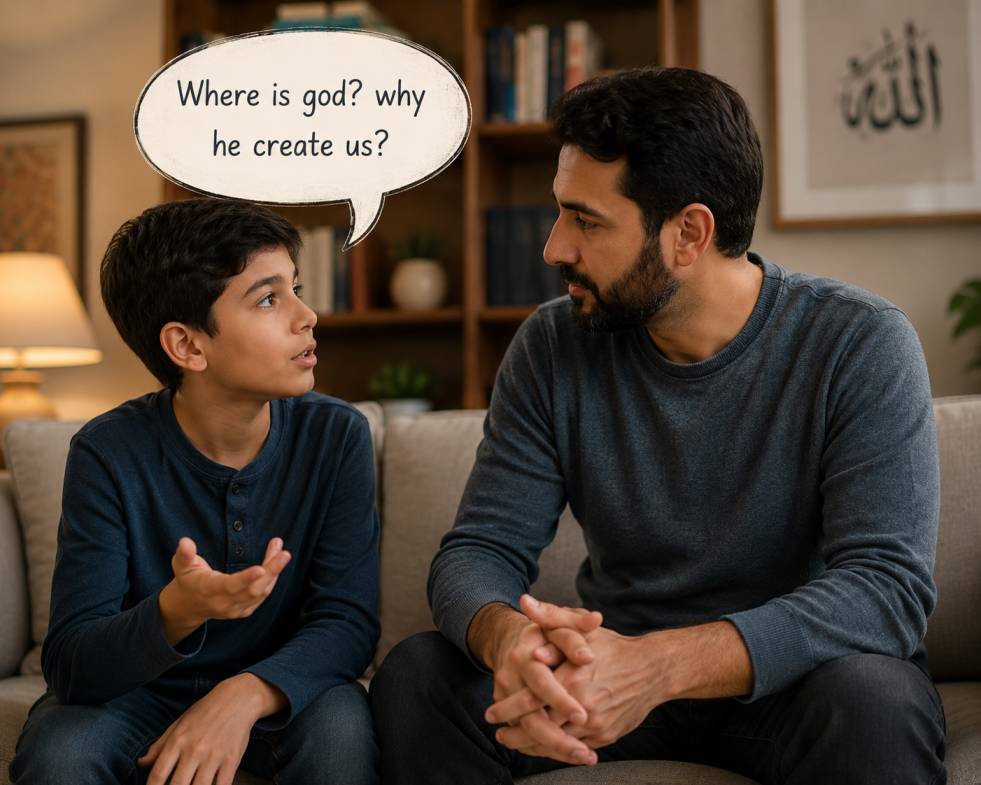
What’s Happening?
- They compare ideas.
- Friends become more influential.
- They seek acceptance and purpose.
Habits That Last
- Read the Seerah together.
- Encourage volunteering.
- Attend youth Islamic programs.
- Discuss current events through an Islamic perspective.
Answer Difficult Questions With Respect
If you don’t know an answer, be honest. Say:
“That’s a great question. Let’s learn the answer together.”
This builds trust and teaches humility.
What to Avoid
- Making children feel guilty for asking.
- Dismissing doubts.
- Publicly embarrassing them.
Support your teenager with knowledgeable mentors who understand both Islam and the challenges of growing up today. Sirat Academy combines authentic Islamic knowledge with engaging teaching methods that help students strengthen both faith and character.
Ages 15–18: The Autonomy Years — Ownership and Conviction
Teenagers are preparing for adulthood. Your role gradually shifts from instructor to mentor.
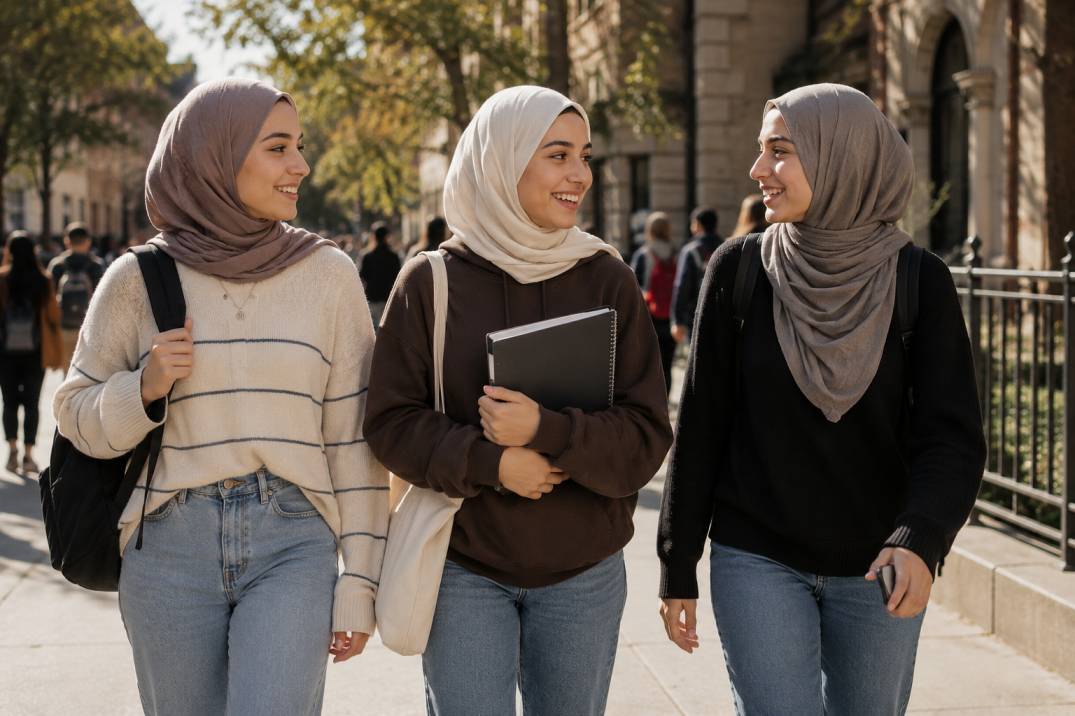
What’s Happening?
- They seek independence.
- They develop personal values.
- They prepare for university and adult life.
Keep the Door Open
Have regular conversations about:
- Faith
- Career choices
- Social media
- Relationships
- Future goals
Listen more than you speak.
What to Avoid
- Controlling every decision.
- Constant criticism.
- Assuming they no longer need your guidance.
Remember, teenagers still need parents—they simply need them in a different way.
The Circle That Builds Strong Identity
Children flourish when three influences work together:
When home, community, and teachers reinforce one another, identity grows resilient.
- Home: where values are practiced daily.
- Community: where they find belonging and friendship.
- Teachers: who reinforce faith with knowledge and wisdom.
When these three circles support one another, children develop resilience and confidence in their Muslim identity.
When Islamic Identity Seems to Be Slipping
Every child experiences moments of uncertainty. Warning signs may include:
- Feeling embarrassed to identify as Muslim.
- Losing interest in prayer or Qur’an.
- Avoiding Muslim friends.
- Believing Islam is only a family tradition.
Rather than reacting with fear or anger, respond with patience, understanding, and renewed connection. Focus on rebuilding trust, answering questions, and surrounding your child with positive Islamic influences. It also helps to understand why Muslim children lose their Islamic identity so you can address the root cause early.
Frequently Asked Questions
How can I make my child love Islam?
Start with love, stories, family worship, and positive experiences instead of fear and punishment.
What is the best age to teach Islam?
From birth. Every age offers unique opportunities to strengthen a child’s relationship with Allah.
What if my child asks difficult questions?
Welcome every question. Honest conversations build stronger faith than avoiding difficult topics.
Can online Islamic classes help?
Yes. When taught by qualified teachers in an engaging environment, online classes provide consistent learning, positive role models, and a supportive community.
Final Thoughts
Building a strong Islamic identity is not about raising a perfect child. It is about raising a child who always knows where to turn—back to Allah.
Every bedtime story, family prayer, kind conversation, and shared act of worship shapes your child’s heart one step at a time.
At Sirat Academy, we partner with parents to nurture faith, character, and confidence through engaging online Qur’an, Arabic, and Islamic Studies classes. Our mission is to help children grow into practicing Muslims who are proud of their identity and equipped to live by Islamic values wherever life takes them.
Begin with two free trial lessons and experience the difference that caring teachers and authentic Islamic education can make.
Book 2 Free Trial Lessons →