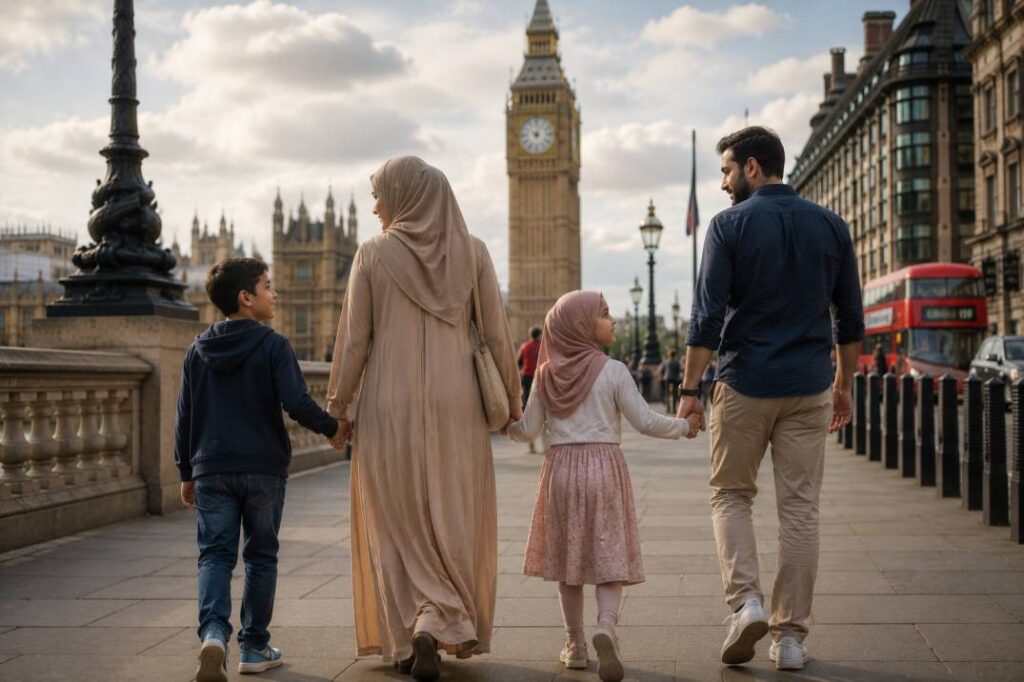
Raising Muslim Kids in the West
How to Make Your Child Love Islam Without Forcing Them
Why do some Muslim children lose interest in Islam as they grow older? How can I make my child love Islam without forcing them? How do I help my child build a strong Islamic identity in a non-Muslim country — and raise children who genuinely love Allah and the Prophet Muhammad ﷺ?
If these questions keep you awake at night, you are not alone. They are among the most common worries shared by Muslim parents raising children in the West.
Here is the truth that changes everything: the strongest protection for your child's faith is not pressure, punishment, or endless reminders. It is love.
When children feel connected to Allah, inspired by the Prophet ﷺ, and proud of their Muslim identity, Islam becomes something they embrace willingly — not something they feel forced to follow. This guide walks you through exactly how to nurture that love, step by step.
Why Do Some Muslim Children Lose Interest in Islam as They Grow Older?

Most children do not drift away from Islam because of one big event. They drift quietly, when faith stops feeling meaningful to them. Understanding the root causes is the first step to preventing them.
- Islam presented as rules without meaning. When a child only hears "do this" and "don't do that" with no why behind it, faith feels like a list of restrictions rather than a relationship.
- A weak emotional connection with Allah. A child who does not feel close to Allah has nothing to hold on to when life gets difficult.
- Social pressure and identity confusion. Growing up surrounded by different values, children can begin to feel that being Muslim makes them "different" in a negative way.
- Negative religious experiences. Harshness, fear, or shame attached to worship can quietly push a child's heart away.
- The absence of positive role models. When children do not see joyful, confident, practising Muslims around them, they have nothing inspiring to grow toward.
Notice the pattern: every cause traces back to a missing connection — to meaning, to Allah, to identity, to people. Rebuild those connections, and interest returns naturally.
Love Is One of the Greatest Protections for Our Children
Here is the core argument of this entire guide, in one chain:
Love creates attachment. Attachment creates commitment. Commitment creates protection.
A child who loves Allah turns toward Him during challenges. A child who only fears punishment may abandon faith the moment nobody is watching. Fear can shape behaviour for a while, but only love shapes the heart for a lifetime.
This is why forcing rarely works long term. Pressure may produce obedience today, but it cannot produce devotion. Love can — and it lasts.
Before Asking Your Child to Love Allah, Help Them Discover How Much Allah Loves Them
We often ask children to love Allah before we have shown them why He is so deeply lovable. Reverse the order. Help your child first feel how much Allah loves them.
Talk about Allah's mercy, His forgiveness, His kindness, His generosity, and His protection — not as abstract concepts, but through the blessings your child can see and touch every single day:
- The family who cares for them
- The health in their bodies
- The food on their plate
- The safety of their home
- The countless small blessings woven through an ordinary day
When a child learns to recognise these gifts as signs of a loving Allah, love flows in the natural direction — from gratitude toward devotion.
How to Help Your Child Love the Prophet Muhammad ﷺ
Children connect with people before they connect with teachings. So the path to loving the Prophet ﷺ is through his beautiful character, told as living stories rather than dry facts.
Share with your child:
- Stories of his mercy and tenderness toward children
- His kindness to everyone he met, even those who wronged him
- His patience in the face of hardship
- His deep, personal love for his Ummah — including your child today
When the Prophet ﷺ becomes a real, warm presence in a child's imagination — someone gentle, brave, and loving — following his example stops feeling like a duty and starts feeling like loyalty to a beloved.
A Tour Inside Your Child's Mind
Beneath the surface, every child is quietly asking a set of profound questions:
- Who am I?
- Why am I here?
- Why should I be Muslim?
- Do I matter?
- Does Allah care about me?
Strip those questions down and you find four universal human needs: identity, belonging, purpose, and meaning.
This is the quiet secret of raising children who love their faith: Islam answers all four. When parents present Islam as the answer to what their child is already searching for, faith stops feeling imposed from the outside and starts feeling like home.
Islamic Parenting in a Time of New Challenges
Today's Muslim parents are raising children in a world their own parents never had to navigate: social media, organised atheism, relentless peer pressure, materialism, and constant identity confusion.
It is tempting to respond by trying to control every thought your child encounters. But that is neither possible nor wise. Here is the shift that actually works:
Your role is not to control every thought. Your role is to become the person your child trusts when difficult questions arise.
A child who can bring their hardest doubts to you — without fear of anger or shame — will stay close to faith far longer than a child who learns to hide their questions. Trust is the channel through which guidance flows.
How to Help Your Child Build a Strong Islamic Identity in a Non-Muslim Country
For families in the USA, UK, Canada, Australia, and across Europe, this is often the deepest concern of all. A strong Muslim identity is built deliberately, through a handful of consistent practices:
- Teach pride in Islam. Help your child see their faith as a gift and a source of strength, never something to apologise for.
- Explain the wisdom behind Islamic teachings. When children understand the reason behind a practice, they own it instead of resenting it.
- Build Muslim friendships. Belonging to a community of peers who share their values protects children from feeling isolated.
- Create a strong sense of belonging at home. Make your home a place where Islam feels warm, celebrated, and joyful.
- Connect children to the Qur'an. A living relationship with the Book of Allah anchors identity in something far stronger than fitting in.
A structured environment makes this far easier. Our Islamic Studies course is built specifically to help Muslim children in the West understand why they believe — covering Aqeedah, Seerah, manners, and identity in a way that builds confident, grounded young Muslims.
A Real Story: When Purpose Changed Everything
One of our teachers once worked with a teenage student who had grown distant from prayer and from Islam altogether. The challenge was clear: the boy felt that faith was simply a set of rules holding him back.
Instead of lecturing, the teacher started a conversation — not about rules, but about purpose. He asked the boy what he wanted his life to mean, who he wanted to become, and where he felt he truly belonged.
The breakthrough moment came when the boy realised that Islam was not the thing standing between him and a meaningful life — it was the answer to it. Faith gave him dignity, direction, and a reason for everything he was already longing for.
The lesson is one every parent can carry: children become far more interested in Islam when they discover that it gives them purpose, dignity, meaning, and direction — not just rules and restrictions.
"It Is Not About What You Teach — It Is What They See You Do"
"It is not about teaching. It is what they see you do."
— a Muslim mother, UK
Children are watching far more closely than they are listening. Long before they absorb a single lecture, they absorb who you are:
- The way you turn to prayer
- Your honesty when it costs you something
- Your patience when you are tested
- Your gratitude in small moments
- Your character when you think no one is paying attention
If you want your child to love Islam, let them see a parent who loves it too. The most powerful Islamic lesson in any home is a parent living their faith with sincerity and joy.
How Can I Make My Child Love Islam Without Forcing Them? (A Practical Action Plan)

Everything above comes together in seven practical strategies you can begin using today:
- Lead with love before rules. Let warmth and connection come first; the rules will feel natural once the heart is engaged.
- Talk about Allah's mercy daily. Make Allah's love a regular, comforting presence in your child's world.
- Share stories of the Prophets. Stories carry values into the heart in a way instructions never can.
- Celebrate Islamic milestones. First fast, first surah memorised, first full prayer — mark them with joy.
- Welcome questions without judgement. Make your home the safest place for your child to ask anything.
- Connect Islam to everyday life. Show how faith shapes kindness, honesty, and gratitude in ordinary moments.
- Surround them with positive Islamic influences. Good teachers, good friends, and a good community do quiet, lasting work.
Prayer is often where this approach is tested most. Salah is one of the milestones parents worry about the most — so it deserves the same gentle, loving method. Our guide on how to teach your child to pray shows how to build the habit through encouragement and connection rather than pressure.
The Goal Is Not Obedience Alone
The aim was never simply to raise a child who follows Islamic rules. The deeper goal is to raise a child who:
- Loves Allah
- Loves the Prophet Muhammad ﷺ
- Feels proud to be Muslim
- Finds real meaning and purpose in Islam
- Carries their faith confidently into adulthood
When love comes first, faith grows deeper, identity grows stronger, and your child is far better prepared to face the challenges of the modern world. You are not just teaching them for today — you are walking with them toward the straight path, the صراط مستقيم, for life.
Help Your Child Fall in Love with Islam
At Sirat Academy, our Al-Azhar graduate teachers help Muslim children in the West build faith, character, and a confident Islamic identity — with love, not pressure. Begin with 2 free trial classes, no commitment.
Book Your Free Trial Class →Frequently Asked Questions
How can I make my child love Islam without forcing them?
Lead with love before rules. Help your child feel how much Allah loves them, share stories of the Prophet ﷺ, welcome their questions without judgement, connect Islam to everyday life, and surround them with positive Muslim role models. When faith feels warm and meaningful rather than imposed, children embrace it willingly.
Why do some Muslim children lose interest in Islam as they grow older?
Children often disconnect when Islam is presented as rules without meaning, when there is no emotional bond with Allah, when social pressure and identity confusion go unaddressed, when religious experiences feel negative or fearful, and when there are few positive role models around them.
How can I help my child build a strong Islamic identity in a non-Muslim country?
Teach pride in being Muslim, explain the wisdom behind Islamic teachings, help your child build friendships with other Muslim children, create a strong sense of belonging at home, and connect them deeply to the Qur'an so their identity is anchored in faith, not in fitting in.
How can I raise children who genuinely love Allah and the Prophet Muhammad ﷺ?
Begin with Allah's love, not His punishment. Point out His mercy, forgiveness, kindness, and the daily blessings around your child. Introduce the Prophet ﷺ through his gentleness with children and his love for his Ummah, because children connect with people before they connect with teachings.