The Biggest Islamic Parenting Mistake at Every Age: From 5 to 18
Your child is not the same person at 5, 10, 14, and 18. So why would we parent them the same way?
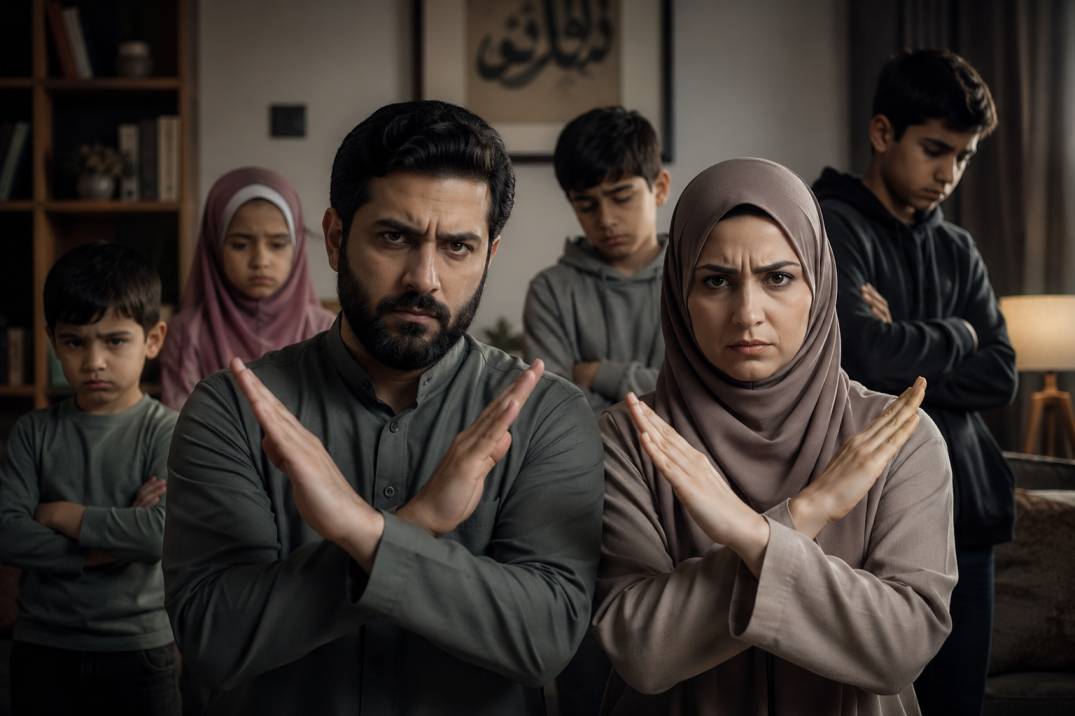
Every Muslim parent wants the same basic thing: to raise a child who knows Allah, loves Islam, has good character, prays, makes good choices, and stays connected to their faith as they grow.
But there is a problem — and most parents never see it coming.
We change our children's clothes as they grow. We change their school. We change their food. We change their activities. Yet we often continue using almost the same parenting approach year after year. The instructions become louder. The rules become stricter. The lectures become longer.
And then, somewhere in the teenage years, a parent quietly wonders: “Why doesn't my child listen to me anymore?”
The answer may not be that your child suddenly became difficult. It may simply be that the parenting method that worked beautifully at eight is no longer appropriate at sixteen. This is one of the quiet reasons many Muslim children drift away from their Islamic identity — not because faith failed them, but because the way it was delivered stopped matching who they were becoming.
Islamic Tarbiyah is not simply about teaching children what Muslims should do. It is about gradually building faith, character, knowledge, responsibility, and a strong Islamic identity. This is at the heart of Sirat Academy's approach: helping children understand and live Islam with confidence rather than merely memorizing information.
And because the child changes, Tarbiyah must change too. The values remain the same. The relationship remains important. But the parent's role evolves:
- At five, your child needs you to connect.
- At ten, they need you to explain.
- At thirteen, they need you to guide.
- At seventeen, they need you to mentor and prepare.
Let's walk through the biggest parenting mistake at every stage — and the shift that fixes it.
Why the Biggest Parenting Mistake Changes With Age
There is no single parenting technique that works from childhood to adulthood. A five-year-old and a seventeen-year-old may both need to learn the importance of Salah, honesty, respect, modesty, and responsibility — but they cannot be taught those values in exactly the same way.
- A five-year-old learns through stories, imitation, repetition, affection, and simple routines.
- An eight-to-ten-year-old needs explanations and honest answers.
- A teenager (11–14) needs conversations, boundaries, and room to make decisions.
- A young adult (15–18) needs responsibility and the space to develop their own conviction.
This is one of the most important principles of Islamic Tarbiyah: the values stay consistent, but the method must mature with the child. The goal is not to control a child for eighteen years. The goal is to raise someone who can choose what is right when you are no longer standing beside them.
The graph below captures the entire thesis of this guide. In healthy Tarbiyah, external control should slowly decrease while internal conviction steadily rises — until, one day, your child carries their faith on their own.
The Biggest Mistake Is Making Islam About Rules and Punishment
At ages five to seven, children are just beginning to understand their relationship with Allah and their place within their family, community, and religion. This is a foundational period — and they are watching everything.
They watch how you pray. They watch how you speak to your spouse. They watch what happens when you become angry. They watch whether you tell the truth. They watch whether you apologize. And through all of it, they are quietly forming an emotional picture of Islam based on what they experience at home.
Turning Islam into a list of “don'ts.” When almost every interaction a child has with their faith is “Don't do that,” “That's haram,” “Allah will punish you,” they begin to associate Islam primarily with restriction and fear.
Teaching children halal and haram is important. Teaching them boundaries is important. But if a child's earliest emotional memory of Islam is correction and pressure, the quiet conclusion forming in their heart is not “I love Islam” — it is “Islam means adults telling me what I cannot do.” That is a very different foundation to build a lifetime of faith upon.
What should parents do instead?
At this age, prioritize connection before correction. Let your child experience that Islam brings meaning, beauty, love, gratitude, mercy, and belonging. Talk about Allah's blessings. Tell stories from the life of Prophet Muhammad ﷺ. Celebrate the moments when they pray. Make Qur'an time warm and encouraging. Let them see you enjoying your own relationship with Allah.
This is the same principle behind helping your child genuinely love Islam rather than merely obey it: warmth first, rules in their proper place. And above all, model the behaviour you want to see. If you want your child to speak respectfully, speak respectfully. If you want them to apologize after a mistake, apologize after yours. If you want them to love the Qur'an, let them see you turning to it.
Stop asking only, “How do I make my child obey?” Start asking, “What kind of emotional relationship with Islam am I helping my child build?”
The Biggest Mistake Is Killing the “Why?”
Something changes around this stage. Your child discovers one of the most powerful words they own: Why?
Why do we pray? Why is this haram? Why does Allah want us to do this? Why do Muslims believe this? Why does my friend do something different?
And sometimes: “But that doesn't make sense to me.” For a tired parent, this can feel exhausting. But it is actually an incredible opportunity.
Treating questions as disrespect. Responses like “Because I said so,” “Don't question Islam,” or “You're too young to understand” may be meant to protect — but the child hears something else: “Questions about Islam are not welcome here.”
Children rarely stop asking questions just because they were told to. They simply learn where not to ask them — and that is a dangerous lesson. This matters even more for Muslim children growing up in a non-Muslim country, where they meet different beliefs, lifestyles, and opinions at school and online every single day. If home is not a safe place for questions, the internet often becomes the place they ask instead.
Turn “Why?” into an opportunity
You don't always need the perfect answer immediately. You can say: “That's a really good question.” “I've never thought about it that way.” “Let's learn about it together.” “I want to make sure I give you the correct answer.” This teaches your child something priceless: Islam is not afraid of sincere questions.
At this age, learning should move from simple instruction toward genuine understanding. Don't only teach “This is what Muslims do” — also teach “Why do Muslims do it?” That is the difference between information and meaningful education. Sirat Academy's Islamic Studies course is built around exactly this principle: focusing not only on what Muslims do, but why — so knowledge becomes connected to everyday life. It sits alongside the broader work of teaching Islamic values to children in a way that actually sticks.
At 5–7 the message was, “Come and do this with me.” At 8–10 it becomes, “Let's understand why we do this.” Your child is developing a mind that wants explanations — give it something meaningful to explore.
The Biggest Mistake Is Treating Independence as Disobedience
This is where many families experience a dramatic change. The child who once told you everything suddenly wants privacy. The child who accepted your decisions starts challenging them: “But why?” “I don't agree.” “My friends don't do that.” “I can decide for myself.”
And parents think: “What happened to my child?” A lot happened. Your child is growing. Their identity is developing. Their social world is becoming more important. Their ability to think critically is increasing. And beneath it all, they are beginning to ask the deeper question of adolescence: “Who am I?”
Responding to independence with more control — more rules, more restrictions, more checking, more lectures, more monitoring. The problem is simple: you cannot keep increasing external control forever. Eventually your child will be in situations where you are not there.
This is precisely why Islamic Tarbiyah must gradually move from external obedience toward internal responsibility. It is also the stage where building a strong Islamic identity in children becomes decisive — because a teenager with a secure sense of who they are can meet peer pressure without being swept away by it.
Boundaries are not the same as control
This does not mean teenagers should have no rules — quite the opposite. Teenagers need boundaries. But they also need to understand the reason behind those boundaries and to gradually participate in the decisions that affect them.
✗ Instead of
- “Because I said so.”
- “You are not allowed to decide this.”
- A twenty-minute lecture after every mistake.
✓ Try
- “Here is the boundary — let's talk about why it exists.”
- “Let's look at the consequences together and decide what's responsible.”
- “What happened? What went wrong? What would you do differently?”
You are not abandoning your authority. You are teaching your child how to exercise responsibility — a far bigger goal than momentary compliance.
At 8–10 it was, “Let me explain it to you.” At 11–14 it becomes, “Let's discuss it together.” Your role is shifting from the person who gives every answer to the person who helps your child learn how to think.
Faith your child understands — not just memorizes
Sirat Academy's Al-Azhar–qualified teachers help children build a real, confident relationship with Qur'an, Arabic, and Islam. Start with 2 free trial classes and see the difference for yourself.
Book Your 2 Free Trial Classes →The Biggest Mistake Is Controlling the Teenager Instead of Preparing Them for Adulthood
This may be the most important stage of all. By 15–18, your child is approaching adulthood. Soon they may leave home for university. They may live with roommates. They may travel. They will meet people you don't know, face temptations you cannot remove, and encounter ideas you cannot filter. And they will have moments when nobody is there to say, “Don't do that.”
This raises the single most important question of Islamic Tarbiyah: What happens when you are not there?
Trying to maintain childhood-level control — monitoring everything, questioning every friendship, inspecting every decision, and interpreting disagreement as rebellion, in the belief that controlling the environment guarantees the choices. But eventually the teenager leaves that environment.
And then the parent finally discovers whether the child developed internal conviction — or simply learned how to comply while being watched. That distinction matters enormously, because only one of them survives the move to university.
The real goal of the teenage years
The question should gradually shift from “How do I make my teenager obey me?” to “How do I help my teenager make good decisions when I am not there?” That means talking about real life — friendships, social pressure, relationships, money, university, identity, social media, doubts, mistakes, temptation, and what it means to be Muslim when nobody else in the room shares your values.
And don't wait for a crisis to begin these conversations. A teenager who knows they can talk to their parents about difficult subjects is far better positioned to seek guidance when they genuinely need it.
Give them responsibility before they leave home
If your seventeen-year-old has never been allowed to make a meaningful decision, how can you expect them to make wise ones at nineteen? Responsibility must be practiced. Let teenagers manage appropriate responsibilities, experience consequences, solve some problems themselves, and make mistakes while the stakes are still manageable — then help them reflect.
The objective is not a teenager who says “My parents won't let me” — but a young Muslim who says “I know what I believe, I understand why, and I know how to make a responsible decision.”
At 11–14 it was, “I will guide you.” At 15–18 it becomes, “I am preparing you to guide yourself according to what you know is right.”
The Same Islamic Values — A Different Parenting Method
Some parents misunderstand age-appropriate Tarbiyah as meaning that Islamic values should become flexible. They don't. The principles remain. Your child still needs to learn Tawheed, Salah, Qur'an, Islamic manners, honesty, respect, responsibility, modesty, kindness, self-discipline, accountability, and good character.
What changes is how you teach them. Consider Salah:
- A young child may need encouragement, routine, imitation, and positive reinforcement.
- An older child needs to understand the purpose and importance of Salah.
- A teenager needs honest conversations about protecting Salah despite school, social pressure, work, and a busy life.
The value is identical. The strategy evolves. That is why Islamic education should never be about simply completing lessons — it should help children understand, practice, and eventually take ownership of what they learn. Sirat Academy's programs in Qur'an, Arabic, Tajweed, and Islamic Studies are all built around that broader goal: a lasting connection with faith that shows up in everyday life.
The Four Parenting Shifts Every Muslim Parent Should Remember
If you remember nothing else from this guide, remember these four words — one for each stage of your child's journey.
Let your child experience Islam as something beautiful, safe, and loving. Build the relationship — don't rush to turn every moment into a lesson.
Curiosity is growing. They need answers, stories, and reasons — and someone who can say, “That's a great question.” Feed curiosity rather than fearing it.
Independence is rising. They need boundaries and room to think, discuss, and take responsibility. Don't fight every attempt at independence — direct it.
They are preparing for adulthood. Success isn't a teenager who behaves while watched — it's a young Muslim who makes good choices when nobody is.
The Parenting Mistake That Can Follow Your Child Through Every Age
Behind all four mistakes lies one deeper mistake: parenting the child you used to have instead of the child standing in front of you.
Sometimes parents become attached to an earlier version of their child. They remember the five-year-old who held their hand, the eight-year-old who asked them everything, the ten-year-old who wanted to sit beside them. And when that child becomes fourteen or seventeen, the parent tries to recreate the old relationship through control.
But your child is supposed to change. Growth is not a parenting failure. Independence is not automatically rebellion. Questions are not automatically disrespect. A teenager wanting privacy does not automatically mean they are hiding something. Your responsibility is not to stop your child from growing — it is to guide their growth.
What Does Successful Islamic Tarbiyah Actually Look Like?
Success is not simply “My child memorized this Surah,” or “My child got good grades in Islamic Studies,” or even “My child obeys me.” Those things may matter — but the deeper question is the one we keep returning to: what happens when the parent is not there?
Ask yourself:
- Does your child know why they pray?
- Can they recognize right from wrong on their own?
- Can they say no to peer pressure?
- Can they ask questions about Islam without being afraid?
- Can they admit when they've made a mistake?
- Can they treat people with good character?
- Do they see being Muslim as something they are proud of?
- Can they carry their faith into university, friendships, work, and adult life?
These are the real indicators of Tarbiyah. The ultimate goal is not external compliance. It is internal conviction.
You Don't Have to Get Every Stage Perfect
Perhaps you are reading this and thinking, “I have already made some of these mistakes.” That's okay. Parenting does not come with a reset button — but the relationship can always be renewed.
Maybe you were too strict when your child was younger. Maybe you shut down questions because you were afraid of where they might lead. Maybe you became overly controlling during adolescence. Maybe you are only now realizing that your teenager is closer to adulthood than childhood. You can still change the relationship. You can start a conversation. You can even say:
“I've been thinking about how I parent you, and I realize I may need to do some things differently.”
That single sentence can be extraordinarily powerful. Your child does not need a perfect parent. They need a parent who is willing to grow with them.
The Goal of Tarbiyah Is Not to Keep Your Child Close Forever
There is a beautiful paradox in parenting. When your child is young, your job is to hold them close. As they grow, your job is gradually to give them more space — not because you care less, but because you are preparing them for the life ahead.
- At five, you may hold their hand while they pray.
- At ten, you answer their questions about Salah.
- At thirteen, you discuss why Salah matters.
- At seventeen, you help them build the discipline to protect Salah even when life gets busy.
And one day, they will pray without you reminding them. That moment is not your loss. That is the fruit of Tarbiyah.
From Connection to Conviction
The journey from childhood to adulthood can be understood as four rising stages — each one building on the last, moving from an emotional bond to a settled, independent identity.
Guidance for every stage — from teachers who understand children
Our teachers are graduates of Al-Azhar University, experienced with children of every age and personality. Meet the teachers who will guide your child through Qur'an, Arabic, and Islam with warmth and wisdom.
Final Thoughts: Your Child Is Growing — Your Tarbiyah Should Too
Every age brings a different parenting challenge:
- At 5–7, don't make Islam feel like a collection of punishments and restrictions.
- At 8–10, don't kill your child's curiosity by treating every question as disrespect.
- At 11–14, don't interpret every attempt at independence as rebellion.
- At 15–18, don't spend all your energy controlling someone you should be preparing for adulthood.
Instead: Connect. Explain. Guide. Mentor. Your child will grow whether you are ready or not. The real question is whether your parenting will grow with them.
Islamic Tarbiyah is not about producing children who simply know Islamic information. It is about nurturing faith, character, responsibility, knowledge, and identity — so that Islam becomes something they understand, value, and carry with them for life. Because eventually, your child will walk through a world you cannot follow them into. And when that day comes, the greatest gift you can give them is not another rule. It is faith that lives inside them, knowledge they understand, character they practice, and an Islamic identity strong enough to guide their choices when you are not there.
That is the real purpose of Tarbiyah — and that is why the way we parent must grow as our children grow.
Give your child faith they understand and an identity they're proud of
Whatever stage your child is in, it is never too early — or too late — to build a stronger foundation. Experience Sirat Academy with 2 completely free trial classes. No pressure, no commitment.
Book Your Free Trial Today →Frequently Asked Questions
What is the biggest mistake in Islamic parenting?
The single deepest mistake is parenting the child you used to have instead of the child in front of you — using the same method at every age. Islamic values stay constant, but the approach must mature: connect at 5–7, explain at 8–10, guide at 11–14, and mentor at 15–18.
At what age should Islamic Tarbiyah begin?
Tarbiyah begins in the earliest years. Ages 5–7 are foundational: children form an emotional picture of Islam by watching how faith is lived at home. At this stage, prioritise warmth, connection, and modelling good character over rules and correction.
How should I respond when my child asks difficult questions about Islam?
Welcome the question rather than shutting it down. Saying “That's a great question — let's learn about it together” teaches your child that Islam is not afraid of sincere questions. Avoid “Because I said so” or “Don't question Islam,” which simply teach children where not to ask.
Why is my Muslim teenager resisting the rules?
Resistance at 11–14 is usually developing independence, not rebellion. The fix is not more control but a shift toward guidance: keep clear boundaries, explain the reasons behind them, and involve your teen in decisions so obedience gradually becomes internal responsibility.
How can I help my Muslim teen stay religious at university?
Build internal conviction before they leave home. In the 15–18 years, give real responsibility, talk openly about friendships, social pressure, doubts, and identity, and let them make manageable decisions. The goal is a young Muslim who makes good choices when no one is watching.
What's the difference between Islamic values and Islamic parenting methods?
The values — Tawheed, Salah, honesty, modesty, respect, good character — never change. The method changes with the child's stage. Salah, for example, is taught through routine at five, through understanding at ten, and through honest conversation about protecting it at seventeen.
Is it too late to change my parenting approach?
No. Parenting has no reset button, but the relationship can always be renewed. Simply telling your child, “I've been thinking about how I parent you, and I want to do some things differently,” can be powerful. Children don't need a perfect parent — they need one willing to grow with them.
How can Sirat Academy support my child's Islamic education?
Sirat Academy offers live online Qur'an, Tajweed, Arabic, and Islamic Studies with Al-Azhar–qualified teachers, designed for Muslim families in the West. The focus is understanding, character, and identity — not just memorisation — and every new student can start with 2 free trial classes.