Raising Muslim Kids · Ages 15–18
Islamic Tarbiyah for Ages 15–18: Preparing Your Teen to Become an Independent Muslim
“What happens when your child no longer needs you to remind them who they are?”
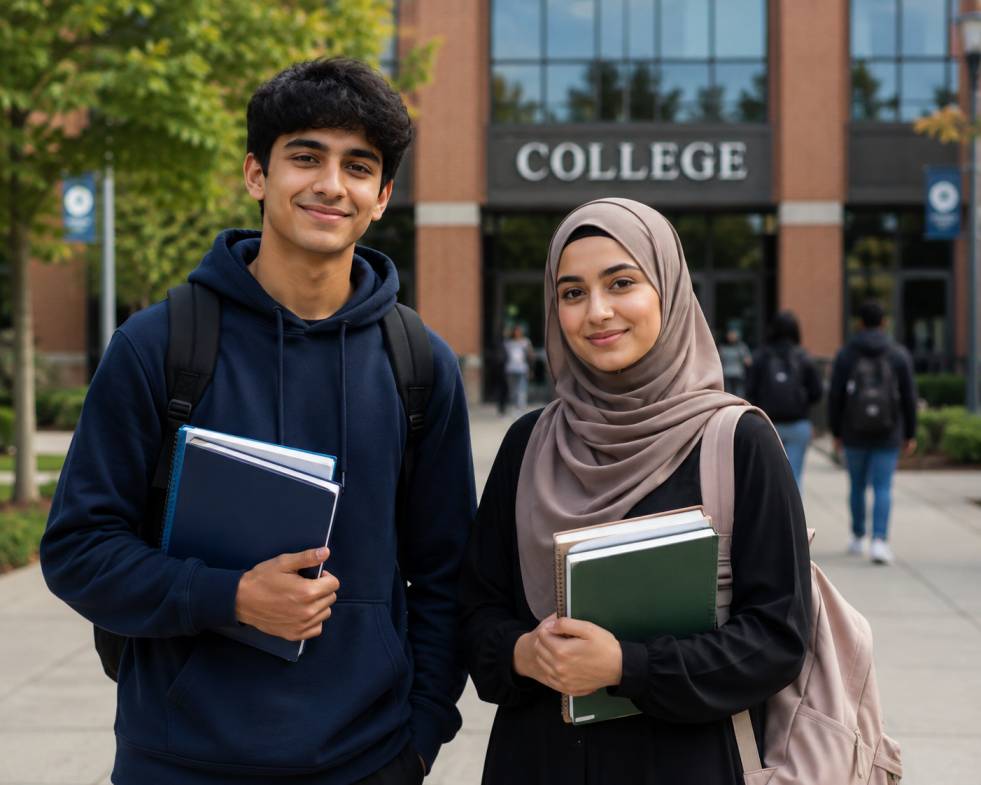
At 8, you may remind your child to pray. At 11, you explain why prayer matters. At 14, you find yourself answering difficult questions about Islam, identity, friends, and the world around them. But by 15–18, something important is changing: your child is moving toward adulthood.
They are developing their own opinions, choosing their own friends, consuming information independently, thinking about university and careers, and making decisions when you are not around. This is exactly why Islamic Tarbiyah for ages 15–18 requires a different approach. The goal is no longer simply to make your teenager obey Islamic rules because their parents told them to. The deeper goal is to help them understand Islam, believe in it, live by it, and eventually choose it for themselves.
For Muslim parents — especially those raising teenagers in Western societies — this stage can feel both exciting and frightening. You may find yourself asking: Will my child remain Muslim when I am no longer there to remind them? Will they be confident about their Islamic identity? What happens when they meet ideas that challenge their beliefs? Can I talk to them about relationships, faith, and doubts without pushing them away? Are they actually ready to become independent Muslim adults?
These are not small questions. The years between 15 and 18 are one of the most important stages of Tarbiyah, because your child is moving from being guided by their parents to becoming responsible for their own choices. This guide walks through that transition step by step — and shows how a structured Islamic Studies programme can support it.
The Goal of Islamic Tarbiyah Changes at 15–18
Islamic education should develop as the child develops. Younger children need foundations: how to pray, how to read Qur’an, how to behave respectfully, how to understand basic Islamic concepts, and how to build positive associations with their faith. As children grow, however, knowledge must increasingly connect to understanding, reasoning, character, and responsibility.
This mirrors Sirat Academy’s broader philosophy: Islamic learning should never stop at memorization. It should help students understand their religion and live its values in everyday life — the same principle behind our approach to teaching Islamic values to children. By the age of 15–18, your teenager should gradually be moving from one mindset to another:
That is a completely different level of Tarbiyah. The rest of this guide is built around the ten questions parents of teenagers ask most — and the practical answers that move a child from obedience to conviction.
01Keeping My Teen Muslim When I Can No Longer Control Their Environment
This may be one of the biggest fears Muslim parents carry. When your child was young, you controlled much of their world — what they watched, what they read, who they spent time with, which activities they attended, when they prayed, and how much time they spent online.
At 15–18, that control becomes increasingly limited. Your teenager has a phone, social media, friends, and teachers. They encounter different philosophies, lifestyles, religions, and ideas. Eventually they may go to university and live away from home. You cannot follow them everywhere — and you should not try to.
The real objective of Tarbiyah is therefore not to create a teenager who behaves like a Muslim only when their parents are watching. It is to develop an internal compass. Your teenager needs to be able to answer, from within:
- Who am I?
- What do I believe?
- Why do I believe it?
- What values guide my decisions?
- Where do I turn when I am confused?
This is why Islamic identity at this age must become something internal rather than something imposed externally. A teenager whose faith lives inside them does not collapse the moment they step outside the home. If you are worried about identity drift, our pillar guide on why Muslim children lose their Islamic identity explains the deeper mechanics — and how to prevent it.
02What My Teen Should Actually Know About Islam Before Becoming an Adult
Many parents naturally focus on Qur’an memorization and correct recitation. These are valuable foundations. But an 18-year-old needs more than the ability to recite Qur’an — they need an Islamic worldview that can help them navigate adulthood. Their education may need to include:
- Aqeedah — the foundations of belief
- Salah and the other acts of worship
- Basic Fiqh (Islamic rulings for daily life)
- Seerah — the life of Prophet Muhammad ﷺ
- Hadith and Tafsir
- Islamic manners (adab) and character development
- Islamic identity, and what is halal and haram
- Relationships and personal boundaries
- Responsibility and accountability before Allah
- How to seek reliable Islamic knowledge
Sirat Academy’s Islamic Studies course is built around exactly this model — covering Fiqh, Aqeedah, Seerah, Hadith, Tafsir, Islamic manners, identity, and character building — so a teenager is not left assembling their worldview from scattered social-media clips. The question is not, “How much Islamic information has my teenager memorized?” A better question is:
Because adulthood will present situations that cannot always be solved by remembering a single rule.
03What to Do When My Teen Starts Questioning Islam
This is one of the most important transitions to understand. Teenagers between 15 and 18 may ask questions that sound frightening: “Why should I believe in Allah? How do I know the Qur’an is really from Allah? Why are there different religions? Why does Allah allow suffering? Why are some rulings different for men and women? What about science and evolution?”
These questions can make parents panic. But questioning is not automatically rejection. A teenager who asks a difficult question may actually be looking for a stronger foundation. The worst response is often, “Don’t ask these questions” — because that teaches something dangerous: that Islam cannot withstand honest inquiry.
Instead, create an environment where difficult questions can be discussed respectfully. If you do not know the answer, it is powerful to say:
Your teenager needs the tools to distinguish between a genuine intellectual question, a simple misunderstanding, a misleading social-media argument, a philosophical challenge, and a question that requires qualified scholarly guidance. The objective is not to eliminate every question — it is to teach your child how to search for truth. Learning from teachers who welcome questions helps enormously; you can meet our Al-Azhar–qualified teachers to see how that patient, question-friendly approach works in practice.
04Talking to My Teen About Attraction, Relationships & Boundaries
At 15–18, attraction and relationships are no longer abstract topics. Your teenager may encounter them directly or through friends, school, social media, or entertainment. If parents refuse to discuss these subjects, teenagers will still learn about them — they will simply learn from someone else.
Islamic Tarbiyah therefore needs to create space for mature, calm conversations about attraction, emotional attachment, modesty (haya’), opposite-sex relationships, boundaries, marriage, online relationships, peer pressure, respect, and dignity. Crucially, the conversation should not consist entirely of “This is haram.”
Your teenager needs to understand why Islamic boundaries exist and what they are trying to protect. They also need to know they can come to you when they are confused, attracted to someone, pressured by friends, or exposed to inappropriate content. The goal is not to pretend teenagers never experience temptation — the goal is to teach them how a Muslim responds to temptation with dignity and self-control.
05Helping My Teen Build a Personal Relationship With Allah
At a younger age, parents create the structure of worship: they remind their children to pray, help them memorize Surahs, and teach them du‘a. But eventually your teenager needs to develop their own relationship with Allah. There is a vast difference between these two statements:
That second statement represents spiritual maturity. Parents can encourage it by helping teenagers experience worship as something meaningful rather than merely another obligation. Try gentle, open questions:
- “What did you understand from the Surah you read today?”
- “What do you usually make du‘a for?”
- “What helps you feel close to Allah?”
- “What do you do when you are worried?”
Help them discover that Islam is not limited to the classroom — it belongs in their difficult days, their decisions, their friendships, their ambitions, their failures, and their hopes. Our guide on how to make your child love Islam offers more ways to help faith become a source of strength rather than a list of rules.
06Preparing My Teen to Face Western Culture Without Losing Their Identity
For Muslim families in Western societies, this question is especially important. Your teenager may genuinely love many aspects of the society around them. They may have non-Muslim friends, take part in school activities, and appreciate freedom, education, technology, sports, and creativity.
Tarbiyah should not teach them that everything outside Muslim communities is automatically bad. Instead, they need to develop the ability to think critically — to ask “Is this compatible with my Islamic values?” rather than “Does everyone else do this?” This distinction is crucial.
A confident Muslim teenager does not need to reject society in order to remain Muslim. They need to know what they can participate in, what they should avoid, what they should question, and why. That is how a teenager develops an Islamic identity strong enough to exist within a diverse society. Our companion guide on raising Muslim kids in a non-Muslim country goes deeper into this balance, and our framework for building a strong Islamic identity in children shows how it is constructed age by age.
07Teaching My Teen to Make Islamic Decisions Without Me
This may be the single most important practical skill for ages 15–18. One day, you will not be there, and your teenager will have to decide alone. They may receive an invitation to a party, encounter alcohol, be pressured by a friend, be offered inappropriate content, face a relationship dilemma, meet an ethical problem at university, or be offered money through questionable means.
If their only Islamic skill is “Ask Mom or Dad,” they are not yet independent. So teach them, increasingly, how to think through an Islamic decision on their own:
When a teenager internalizes this sequence, they are no longer dependent on your presence to act as a Muslim. That is the quiet shift from obedience to responsibility.
08When My Teen Makes Mistakes or Their Faith Weakens
Almost every teenager will make mistakes. Some are small; others may seriously concern their parents. A teen may stop praying consistently, become attached to the wrong friends, consume inappropriate content, become rebellious, or temporarily lose interest in Islamic learning.
The parent’s reaction matters enormously. Correction is necessary — but humiliation, constant shouting, and making a teenager feel they are no longer “a good Muslim” tends to create distance rather than growth. Your teenager needs to understand something fundamental:
Tarbiyah should teach repentance (tawbah), responsibility, and recovery. A mature Muslim is not someone who never errs; a mature Muslim learns to recognize the mistake, take responsibility, seek forgiveness, correct their behaviour, and return to Allah. That is a lesson your teenager will need for the rest of their life — and it is far more durable than fear.
09Balancing Islamic Tarbiyah With My Teen’s Independence
This is where many parents struggle. They want their teenager to become responsible — but continue making every decision for them. They want maturity — but do not give opportunities to practice it. They want independence — but panic whenever their teenager disagrees.
At 15–18, the relationship needs to change gradually. The parent should move along one track, and the teenager along another:
This does not mean parents stop guiding — it means they guide differently. Give your teenager appropriate responsibilities. Let them make some decisions. Discuss consequences. Allow them to experience reasonable consequences when they slip. Ask for their opinion, and listen before responding. Most importantly, build a relationship in which your teenager knows: “My parents will guide me — and they will also respect me as a person who is becoming an adult.”
10Knowing If My Teen Is Ready to Become a Muslim Adult
This is perhaps the most important question of all. Parents often measure Islamic success through visible achievements: how many Surahs memorized, how often they attend classes, how well they recite, whether they pray when reminded. These things matter — but they are not the whole picture.
Imagine your child is 18 and leaves home. You can no longer remind them to pray, monitor their phone, choose their friends, control their university environment, or answer every question. What would you want them to carry with them? Ideally, they will have developed the ability to:
- Pray without parental supervision
- Turn to Allah during difficulty
- Understand the foundations of their faith
- Ask difficult questions without abandoning their faith
- Seek reliable Islamic knowledge
- Recognize harmful influences and resist peer pressure
- Make decisions according to Islamic principles
- Take responsibility for mistakes, repent, and return to Allah
- Treat people with good character
- Feel confident about being Muslim — and keep learning after leaving home
That is a far stronger definition of successful Tarbiyah than a memorization count alone.
Give Your Teen a Foundation That Lasts Beyond Your Reminders
Our Al-Azhar–qualified teachers help teenagers build conviction, character, and a personal connection to Allah — not just memorization. Start with two free trial classes and a personal level assessment.
Book 2 Free Trial Classes →No pressure · No commitment · Just one conversation to see the difference
What Parents Should Focus On During Ages 15–18
If we reduce this entire stage to a practical framework, there are five major goals — five pillars that together produce an independent Muslim adult.
1. Build Conviction
Your teenager needs to know why they believe — not simply what they were taught. Conviction is what keeps faith standing when it is questioned.
2. Build Islamic Identity
They should be able to say, “I am Muslim, and I am proud of my Islam,” without feeling that being Muslim prevents them from participating positively in society.
3. Build Character
Islamic knowledge should show up in behaviour: honesty, responsibility, respect, self-control, kindness, and discipline. Character (akhlaq) is central to the entire mission of Islamic education.
4. Build Decision-Making Skills
Teach your teenager how to make Islamic decisions when nobody is there to tell them what to do.
5. Build Independence
The ultimate goal is not a teenager who depends on their parents to remain Muslim. It is a young adult with enough knowledge, conviction, character, and spiritual connection to continue the journey on their own.
Tarbiyah at 15–18 Is Preparation for a Lifetime
The teenage years are not simply the final stage of childhood. They are the bridge to adulthood. Your teenager is going to leave your home one day. They will face opportunities you cannot predict, meet people you have never met, hear arguments you never anticipated, and make decisions you cannot make for them. Eventually, their Islam must belong to them.
That is why the question parents should ask is not simply, “How do I make my teenager practice Islam?” A deeper question is:
That is the heart of Tarbiyah for ages 15–18. You are not simply preparing your child for the next school year — you are preparing a young Muslim for adulthood. The most meaningful outcome is not a teenager who behaves perfectly under supervision, but an adult who knows where they stand, knows why they believe, knows how to return to Allah when they fall, and carries their faith with confidence wherever life takes them.
The Straight Path — Walked Alone
ٱهْدِنَا ٱلصِّرَٰطَ ٱلْمُسْتَقِيمَ
The goal of Tarbiyah is not to keep your child close to you forever. It is to help them walk the straight path (sirat al-mustaqim) when they eventually walk without you. That is the real transition — from being raised Muslim to consciously living as a Muslim.
Frequently Asked Questions
At what age should Islamic Tarbiyah shift from rules to reasoning?
The shift is gradual, but it accelerates around 11–14 and should be well underway by 15–18. Younger children need clear structure and foundations; teenagers need to understand the reasoning behind Islamic teachings so they can choose them consciously. By 15–18, the aim is for your teen to move from “my parents expect this” to “I understand why Islam teaches this, and I choose it.”
My teenager is questioning Islam — does that mean they’re losing their faith?
Not necessarily. Questioning is a normal part of intellectual and spiritual development, and it is often a sign that your teen is trying to build a stronger foundation rather than reject their faith. The healthiest response is to welcome the question and, if you don’t know the answer, look for it together from a trustworthy source. Learning from patient, qualified teachers who make room for questions helps a great deal.
How do I talk to my Muslim teen about relationships and dating in an Islamic way?
Have calm, honest conversations rather than avoiding the topic — because if you don’t discuss it, someone else will. Explain the purpose behind Islamic boundaries (modesty, dignity, and protection) instead of only saying “this is haram,” and make it clear your teen can come to you when they feel confused or pressured. The goal is to teach how a Muslim responds to temptation with self-control, not to pretend temptation doesn’t exist.
What should a Muslim teenager know about Islam before they turn 18?
Beyond Qur’an recitation, a teen benefits from an Islamic worldview: the basics of Aqeedah (belief), Salah and worship, essential Fiqh, Seerah, Hadith and Tafsir, Islamic manners, what is halal and haram, and — critically — how to seek reliable Islamic knowledge independently. A structured Islamic Studies programme ties these together so your teen isn’t assembling their faith from scattered clips online.
My teen has stopped praying regularly — what should I do?
Correct with care, not humiliation. Constant shouting or shaming usually creates distance rather than change. Reconnect prayer to meaning — help your teen experience it as turning to Allah in difficulty, not just an obligation — and remind them that a mistake never closes the door to Allah. Repentance, responsibility, and return are part of Tarbiyah too.
How can I help my teen stay Muslim at a Western university, away from home?
Build the internal compass before they leave: conviction (knowing why they believe), identity, character, and the ability to make Islamic decisions alone. Teach critical thinking — “Is this compatible with my values?” rather than “Does everyone else do this?” — so they can engage positively with society without losing themselves. Our guide on raising Muslim kids in a non-Muslim country covers this in more depth.
Can online Islamic classes really help teenagers, or are they only for younger children?
They can be especially valuable for teenagers. At 15–18, teens benefit from qualified teachers who can answer hard questions, explain the reasoning behind Islamic teachings, and connect knowledge to real life. Sirat Academy’s teachers are Al-Azhar graduates experienced with older students; you can meet the teachers or book two free trial classes to see whether it’s a fit for your teen.
Prepare Your Teen to Choose Islam for Themselves
One conversation can change everything. Book two free trial classes and let us help you build conviction, character, and confidence — the foundation your teen will carry for life.
Start With 2 Free Classes →