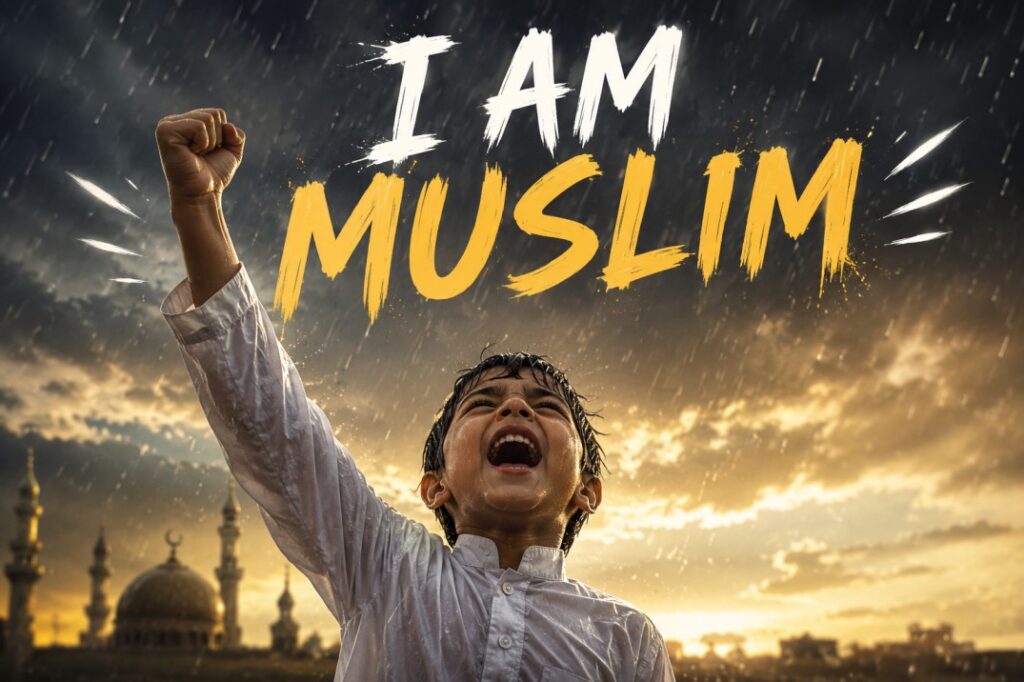
Raising Muslim Kids in a Non-Muslim Country: The Complete Guide to Protecting Their Faith, Identity, and Future
Will my child still love Islam when they're old enough to make their own choices?
If you've ever asked yourself that question, you're not alone.
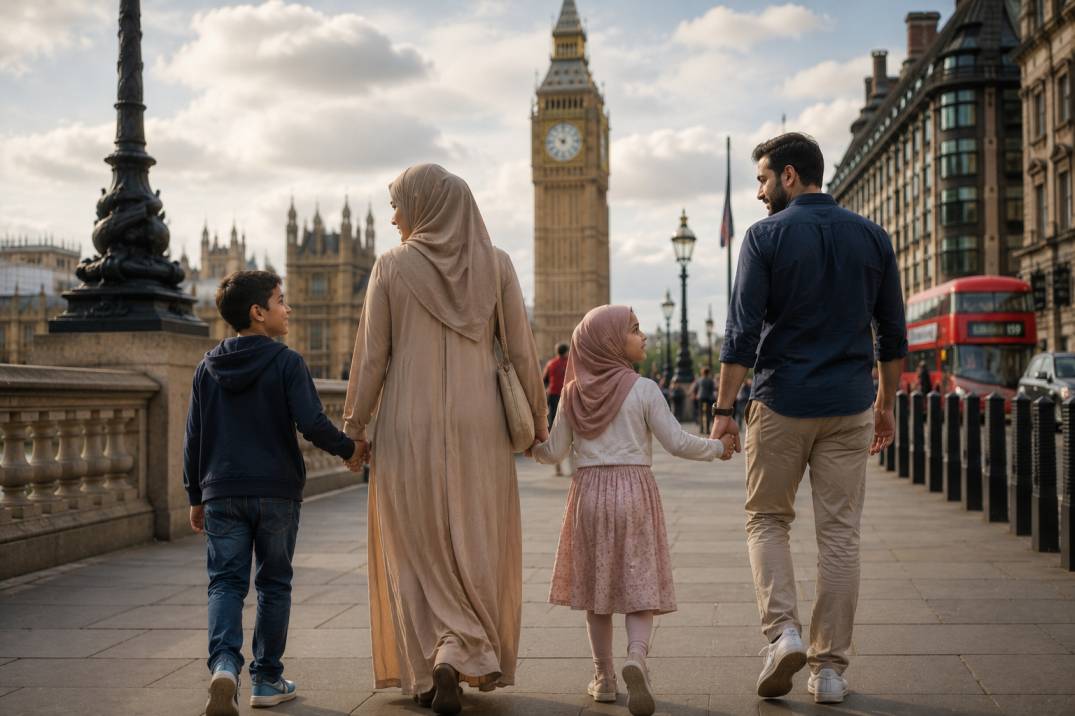
For Muslim parents living in the United States, the United Kingdom, Canada, Australia, Europe, or any other non-Muslim country, raising children often feels like swimming against the current.
Every day, your child is exposed to ideas, values, celebrations, and lifestyles that may differ from what you teach at home. School friends celebrate holidays your family doesn't observe. Social media influencers shape opinions before parents even have a chance to start the conversation. As children grow older, they naturally begin asking difficult questions:
These aren't signs that your child is becoming "bad." They are signs that they're trying to understand who they are in a world filled with competing identities.
The real challenge isn't simply teaching your child how to pray or memorize Qur'an. It's helping them develop an Islamic identity so strong that they choose Islam because they believe in it—not because you told them to.
Allah reminds parents of their responsibility:
"O you who have believed, protect yourselves and your families from a Fire whose fuel is people and stones…"
Qur'an 66:6
This responsibility can feel overwhelming, especially when you're raising children far from a Muslim-majority environment. The good news is that thousands of Muslim families have successfully raised children who are confident, compassionate, and deeply connected to their faith while living as minorities.
This guide will explore the challenges Muslim parents face, why children sometimes drift away from Islam, and practical ways to build a home where faith grows naturally.
Why Raising Muslim Children Today Feels More Challenging Than Ever
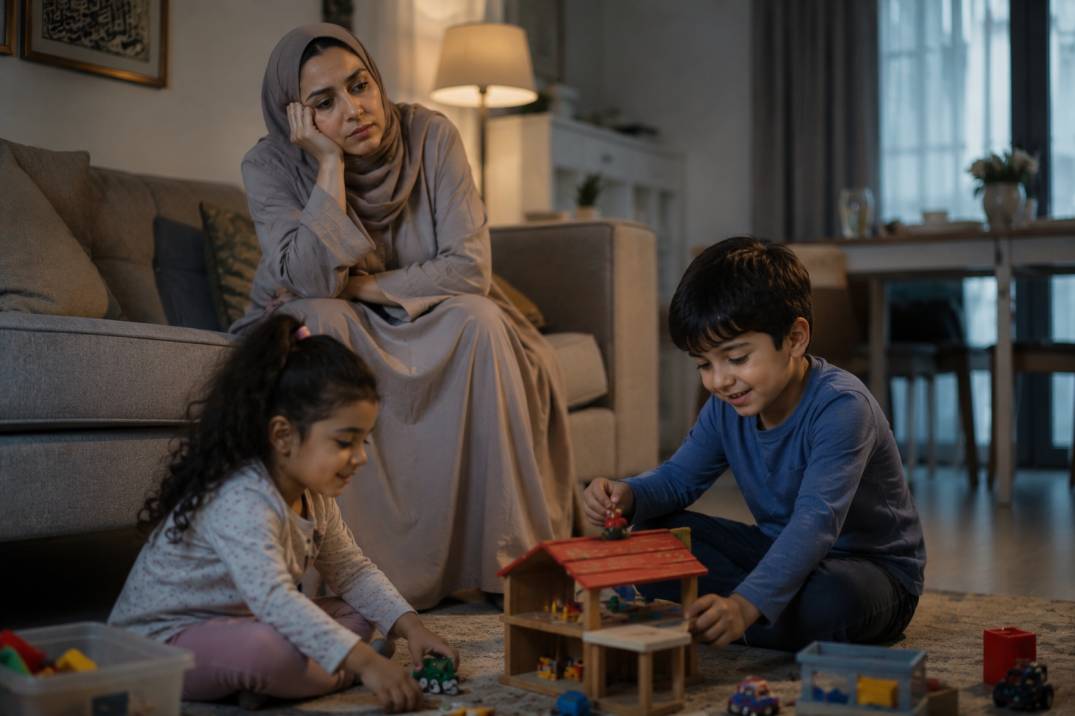
Every generation of parents has faced its own challenges.
Previous generations worried about finding halal food, building mosques, or preserving cultural traditions. Today's parents face something far more subtle: a battle for their children's identity.
Unlike previous generations, children are no longer influenced only by their families, schools, and neighborhoods. They carry the world in their pockets.
A ten-year-old today can spend hours consuming content from YouTubers, TikTok creators, gamers, celebrities, and influencers whose values may be completely different from Islamic teachings. These voices often become more familiar than local imams, teachers, or even parents.
The challenge isn't simply exposure to different beliefs. Islam teaches Muslims to live respectfully alongside people of all faiths and backgrounds.
The challenge is helping children answer an important question:
"Who am I?"
If that question isn't answered at home, someone else will answer it for them.
Growing Up Between Two Worlds
Many Muslim children living in Western societies grow up balancing two identities. At home, they hear the Adhan, read the Qur'an, and celebrate Eid. At school, they celebrate classmates' birthdays, hear conversations about Halloween, Valentine's Day, and Christmas, and encounter worldviews that may conflict with Islamic beliefs.
Every day your child is gently pulled between two worlds — and looks to you to answer "Who am I?"
For many children, this creates an internal conflict. They don't necessarily reject Islam. They simply want to belong.
Research in developmental psychology consistently shows that children have a deep psychological need for belonging and acceptance. During adolescence especially, peer approval often becomes one of the strongest influences on behavior.
This explains why even children from loving Muslim families may begin asking questions like: "Why do I have to be different?" and "Why can't I just fit in?"
Understanding this emotional need helps parents respond with empathy instead of frustration.
The Goal Isn't to Isolate Your Child
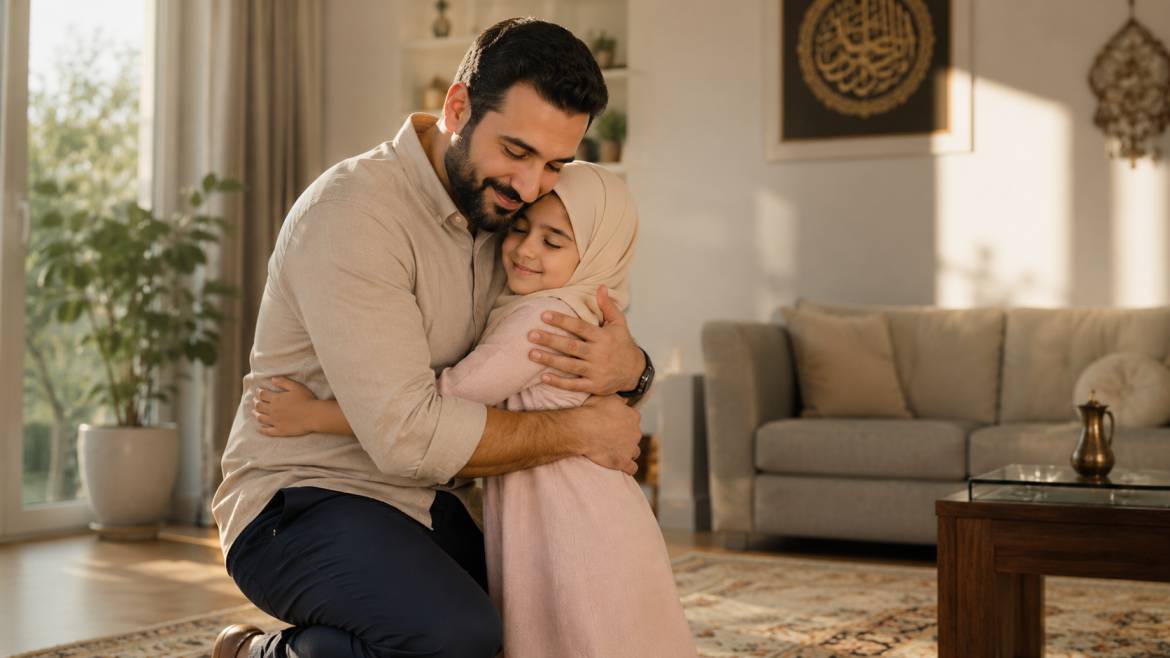
Some parents respond by trying to shield their children from every outside influence. Others take the opposite approach and hope their children will naturally "figure it out." Neither extreme is sustainable.
The Prophet Muhammad ﷺ never taught Muslims to isolate themselves from society. Instead, he taught believers to engage with wisdom, integrity, and strong character.
A child who understands why they are Muslim is far more resilient than a child who simply knows what is allowed and forbidden.
The goal isn't to raise children who fear the world — it's to raise children who can walk confidently through it without losing themselves.
The Fear Every Muslim Parent Carries
Most parents don't worry about Halloween. They don't lose sleep because of Christmas decorations. Those are only symptoms. The real fear runs much deeper. It sounds like this:
These fears are rarely discussed openly, but they are common among Muslim parents raising children in non-Muslim societies.
The Prophet Muhammad ﷺ reminded every parent of the weight of this responsibility:
"Each of you is a shepherd, and each of you is responsible for his flock."
Sahih al-Bukhari & Sahih Muslim
This hadith is not meant to create anxiety. Rather, it reminds us that raising righteous children requires intentional effort, patience, and reliance upon Allah.
"Am I Raising a Believer—or Just Someone with a Muslim Name?"
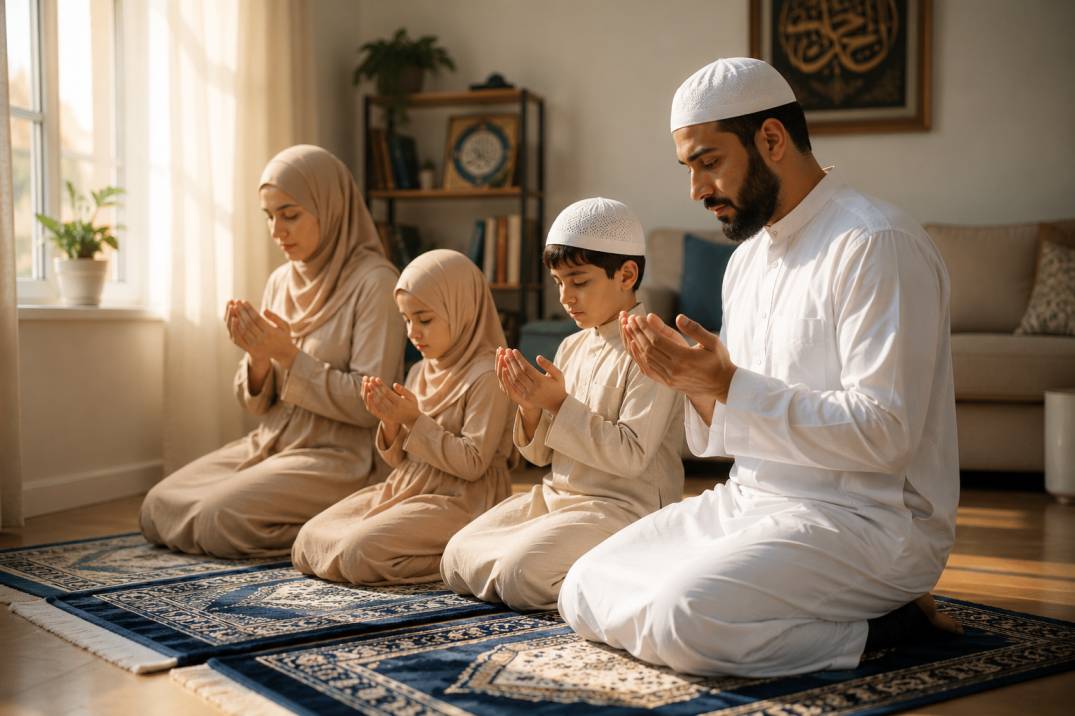
One of the most difficult realities facing modern Muslim families is that religious practice doesn't always translate into personal conviction.
A child may memorize surahs, attend Islamic school, fast during Ramadan, and pray because their parents ask them to. Yet still struggle to answer one simple question:
"Why do I believe?"
When faith becomes nothing more than a checklist of religious obligations, it often weakens once external pressure disappears.
This is why some young adults stop praying shortly after moving away for university. Not because they suddenly discovered new ideas. But because they never built a personal relationship with Allah in the first place.
As the great scholar Ibn al-Qayyim emphasized, the heart is the foundation of every action. When the heart is nurtured with love of Allah, righteous actions follow naturally.
Parents should aim to cultivate faith that grows from within—not merely compliance that depends on supervision.
Faith Is Caught Before It Is Taught
Children learn far more from what parents consistently do than from what they occasionally say.
If parents rush to prayer because they genuinely long to meet Allah, children notice. If the Qur'an is only opened during Ramadan, children notice that too. If Islam is associated only with correction, punishment, and constant reminders of what is haram, children begin to associate religion with pressure instead of peace.
Conversely, when children witness gratitude after hardship, kindness toward neighbors, honesty in business, patience during disagreements, and sincere du'a in everyday moments, they begin to understand that Islam is not merely practiced—it is lived.
This is one of the most powerful forms of Islamic education any parent can provide.
How to Make Your Child Love Islam Instead of Seeing It as a List of Rules

Many parents unknowingly begin teaching Islam from the outside in. First the rules. Then the obligations. Then the consequences. Only much later do they talk about Allah's mercy, wisdom, beauty, and love.
Yet the Qur'an repeatedly introduces believers to Allah before commanding them to obey Him. It nurtures the heart before legislating the actions. Children deserve the same approach.
Start from the heart outward: when a child loves Allah first, worship becomes meaningful — not a burden.
Instead of asking "How do I make my child obey?" consider asking "How do I help my child fall in love with the One they worship?" This shift is the heart of helping your child love Islam without pressure.
When children know Allah as Ar-Rahman (The Most Merciful), Al-Wadud (The Most Loving), and Al-Hakeem (The Most Wise), acts of worship begin to make sense. Prayer becomes a conversation rather than a burden. Fasting becomes an opportunity for gratitude rather than deprivation. Islamic values become expressions of love for Allah instead of restrictions imposed by parents.
Love alone is not enough, and neither are rules alone. Lasting faith grows when children understand both the wisdom behind Islamic teachings and the mercy of the One who revealed them.
Akhlaq in Islam: The Manners That Shape Your Child's Character
If faith is the root of a Muslim child's identity, then akhlaq—noble character and manners—is the fruit that everyone around them can see. A child may memorize surahs and pray on time, yet what people remember most is how that child treats others. In Islam, good character isn't an optional extra on top of worship; it is one of the highest goals of worship itself.
Allah praised His Messenger ﷺ not for his strength or status, but for his character:
"And indeed, you are of a great moral character."
Qur'an 68:4
And the Prophet ﷺ summarized his entire mission in a single, striking sentence:
"I was only sent to perfect good character."
Musnad Ahmad · Al-Adab Al-Mufrad
Here is the part many parents overlook: akhlaq is rarely taught through lectures—it is absorbed. Children watch how we speak to the cashier, how we react when someone cuts us off in traffic, and whether we keep the small promises we make to them. The manners we perform in front of our children quietly become the manners they carry into the world.
The Islamic Manners Every Child Should See at Home
These are the core akhlaq worth modeling deliberately—not as rules to enforce, but as habits your child sees lived out every single day. For a child-friendly overview you can explore together, see our full guide to akhlaq for kids:
When honesty, generosity, respect, kindness, gratitude, empathy, patience, and trustworthiness are lived consistently at home, they shape your child's Islamic character from the inside out—long before they can define these values in words. A child raised around good akhlaq doesn't just know that Islam teaches mercy; they experience it, and it becomes part of who they are.
Of all these manners, honesty is often the hardest to protect in a world of white lies, exam pressure, and carefully curated online personas. Our dedicated guide on honesty in Islam for kids offers Prophetic stories, authentic hadith, and simple everyday scripts to help truthfulness take root early.
Your child's akhlaq will look a lot like yours. Model the character you hope to see.
Nurturing Akhlaq at Every Age
How you cultivate character naturally shifts as your child grows. A five-year-old learns kindness through play and stories, while a teenager wrestles with honesty and integrity in far more complex situations. Our age-by-age tarbiyah guides show you exactly what to focus on at each stage:
At Sirat Academy, akhlaq isn't an afterthought—it's woven through every lesson. Our Al-Azhar-qualified teachers model and nurture these manners in our Islamic Studies classes, so character grows hand in hand with knowledge. You're always welcome to meet the teachers who will guide your child.
Answering the Questions Every Muslim Parent Eventually Faces
There comes a moment in every Muslim family's journey when parenting moves beyond teaching routines and enters the realm of conviction. It's the moment your child begins asking why.
For many parents, these questions feel intimidating. You may worry about saying the wrong thing or fear that answering will only lead to more doubts. In reality, questions are not the enemy.
Silence is.
A child who feels safe asking difficult questions at home is far more likely to remain connected to Islam than a child who feels judged every time they express uncertainty. The Prophet Muhammad ﷺ welcomed sincere questions from his companions and answered them with patience, wisdom, and compassion. Parents should strive to do the same.
"Why Do I Have to Pray When None of My Friends Do?"
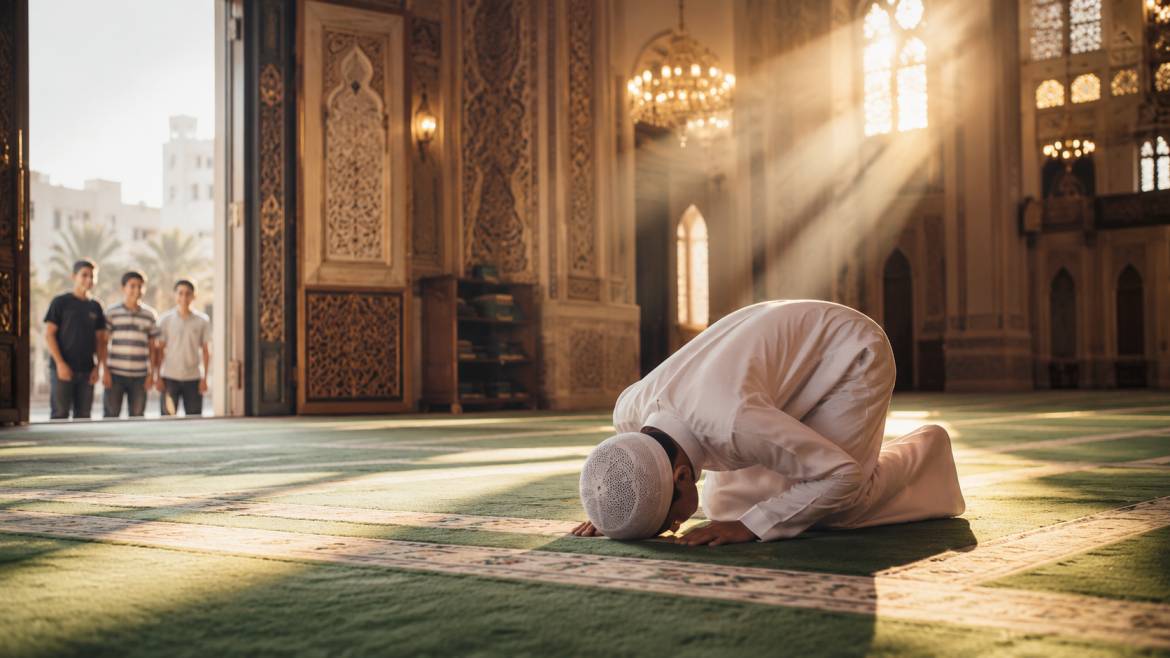
Perhaps no question captures the challenge of raising Muslim children in the West more than this one. To a child, prayer isn't simply an act of worship. It's a reminder that they're different.
"Because Allah said so."
"Imagine if you only spoke to your best friend once a year. Would your friendship stay strong? Prayer is how we stay connected to Allah every single day — not because Allah needs our prayers, but because our hearts need Him."
Children respond far better when they understand the purpose behind worship. Explain that every person follows something. Some chase popularity. Some chase money. Some chase success. A Muslim chooses to keep Allah at the center of life.
If your child is still building this habit, our step-by-step guide on how to teach your child to pray offers gentle, age-appropriate ways to make Salah feel meaningful rather than forced.
Prayer isn't a burden. It's a daily reminder of who we are.
"Why Can't We Celebrate Christmas or Halloween?"
This question isn't usually about holidays. It's about belonging. Your child sees classmates decorating classrooms, exchanging gifts, wearing costumes, and talking excitedly about celebrations. Naturally, they wonder why their family is different.
"Because it's haram."
"Every family has traditions that reflect what they believe. As Muslims, we love and respect Prophet Isa (Jesus) ﷺ, but our beliefs are different. Allah gave us Eid as our own beautiful celebrations that bring families together and remind us to thank Him."
This shifts the conversation away from deprivation toward gratitude. Parents can reinforce this message by making Eid genuinely memorable.
Children don't compare holidays based on theology. They compare experiences. Family traditions, meaningful gifts, community gatherings, delicious food, games, and joyful memories all help children associate Islam with happiness rather than restriction.
"Why Am I Different from Everyone Else?"
Every child wants to belong. Feeling different can be uncomfortable, especially during adolescence. Help your child understand that being different isn't a weakness. It's part of every meaningful identity.
Likewise, Muslims strive to live according to values revealed by Allah. Remind them that the Qur'an never promises believers that following the truth will always make them fit in. Instead, Allah repeatedly encourages believers to remain steadfast even when they are in the minority.
Confidence grows when children understand that their worth comes from Allah—not from the approval of classmates.
Helping Your Child Thrive at School Without Losing Their Faith
For many Muslim children, school is where their Islamic identity is tested every single day. Parents cannot control everything that happens in the classroom. What they can do is prepare their children before those situations arise.
Think of school not as a battlefield but as a training ground where children learn how to live their faith with confidence, kindness, and wisdom — the same spirit behind teaching Islamic values to children in everyday life.
Participating Without Compromising Islamic Values
One of the greatest misconceptions parents have is believing their child must either participate in everything or withdraw completely. Islam teaches a balanced path. Children should learn to respect everyone while remaining confident in their own beliefs. That means they can:
- Treat every classmate with kindness
- Participate in community service projects
- Work in diverse teams
- Build healthy friendships
At the same time, they can politely decline activities that conflict with Islamic beliefs. Teach them simple, respectful responses such as:
Confidence often comes from preparation. Role-playing these conversations at home can make real-life situations much less stressful.
Working with Teachers as Partners
Many parents hesitate to speak with teachers because they worry about being seen as demanding. In reality, most teachers appreciate respectful communication. Consider meeting your child's teacher early in the school year. Explain:
- Why Ramadan may affect lunchtime routines
- The importance of Jumu'ah prayer
- Any modesty requirements for sports or swimming
- Dietary restrictions
- Eid absences
Approach these conversations with openness rather than confrontation. Most schools are happy to make reasonable accommodations once they understand your family's needs. Building positive relationships with teachers also shows your child that practicing Islam and engaging respectfully with wider society can go hand in hand.
Helping Children Handle Peer Pressure
Peer pressure doesn't always look dramatic. Sometimes it's as simple as wanting to laugh at the same jokes, dress like everyone else, or avoid appearing "too religious."
Instead of teaching children to fear peer pressure, teach them how to recognize it. Ask reflective questions such as:
- "Why do you want to do that?"
- "Is it because you believe it's right—or because everyone else is doing it?"
- "What would make Allah pleased?"
Helping children pause and think before following the crowd builds decision-making skills that will benefit them throughout life.
Preparing Your Child for Bullying and Islamophobia
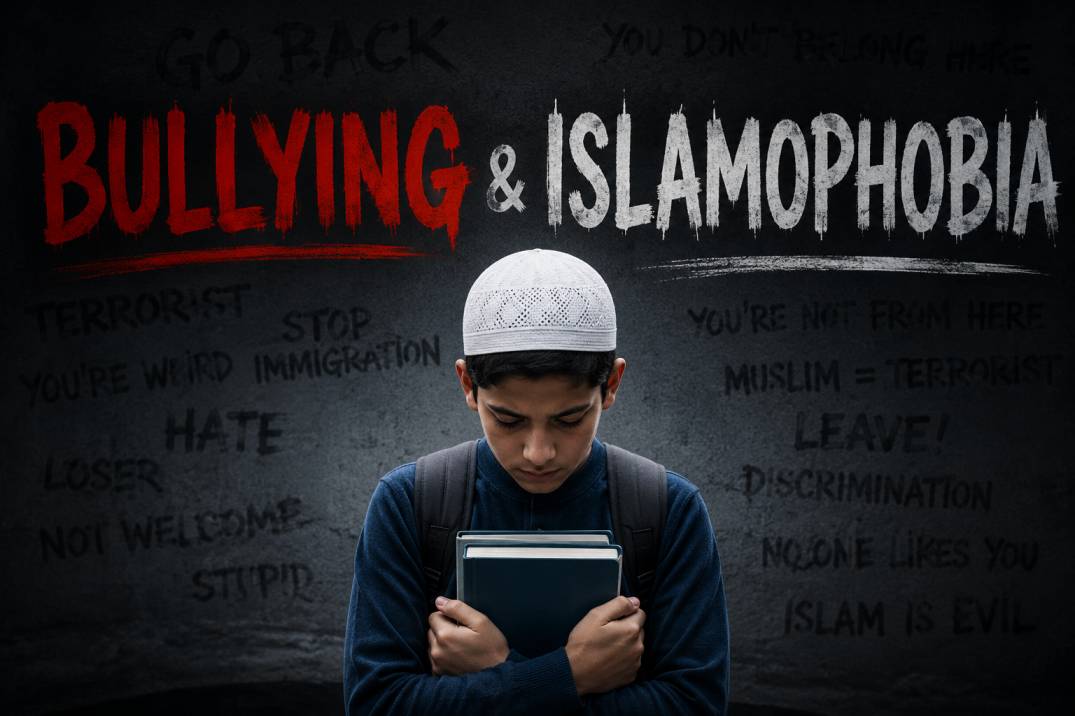
No parent wants to imagine their child being mocked because of their faith. Unfortunately, some Muslim children experience teasing, stereotypes, or even outright discrimination.
Preparing your child isn't about making them fearful. It's about making them resilient. Explain that unkind words often come from misunderstanding or ignorance rather than truth. Encourage them to respond with dignity instead of anger.
If someone asks a sincere question about Islam, answer politely. If someone is intentionally insulting, teach your child that walking away and informing a trusted adult is a sign of strength—not weakness.
The Prophet Muhammad ﷺ endured insults with remarkable patience and dignity while standing firmly upon the truth. His example teaches Muslim children that confidence doesn't require hostility.
If Someone Calls Your Child a "Terrorist"
Sadly, some Muslim children experience offensive comments like this. Prepare your child before it ever happens. Tell them:
- Stay calm
- Do not respond with insults
- Move to a safe place
- Tell a teacher immediately
- Tell your parents as soon as you get home
Then reassure them:
Parents should also document incidents and work collaboratively with school staff to ensure bullying is addressed appropriately.
Choosing Friends Without Living in Fear
Every parent worries about influence. But trying to control every friendship rarely works—especially as children grow older. Instead of choosing friends for your child, teach them how to choose friends wisely. Ask questions like:
- Does this friend encourage kindness?
- Are they honest?
- Do they respect your beliefs?
- Do you become a better person after spending time together?
The Prophet ﷺ compared companionship to a perfume seller and a blacksmith — children remember stories like this far longer than lectures.
Children remember stories like this far longer than lectures. Friendship isn't about whether someone is Muslim or non-Muslim. It's about whether that relationship consistently pulls your child closer to good character or further away from it.
Protecting Faith Without Building Fear
Many loving parents unintentionally make the outside world seem frightening. Children hear messages like:
- "Everyone outside is a bad influence."
- "Never trust anyone."
- "The world wants to destroy your faith."
While these warnings usually come from love, they can leave children feeling anxious—or even curious to explore what has been portrayed as forbidden. A healthier approach is to build discernment rather than fear.
Teach children that good and bad influences exist everywhere. The goal isn't to hide from the world. It's to develop the wisdom to navigate it while staying connected to Allah. When children understand why they believe what they believe, they become far more resilient than when they simply avoid difficult situations.
Building an Islamic Home When You Don't Live Near a Muslim Community
One of the greatest concerns Muslim parents living in the West share is: "We don't have a strong Muslim community nearby. How can my children develop a strong Islamic identity?"
While having a supportive community is undoubtedly beneficial, the first madrasah has always been the home. Long before children meet an imam, attend an Islamic school, or memorize the Qur'an, they learn Islam by watching their parents. They observe:
- How you react when life becomes difficult
- Whether prayer is a priority or an interruption
- Whether the Qur'an is only displayed on a shelf or opened regularly
- Whether Islam is something you simply practice—or something you genuinely love
The Prophet ﷺ spent thirteen years in Makkah building faith before Islamic laws were fully established. This teaches parents an important lesson: strong homes produce strong believers. For families exploring learning at home, resources on homeschooling and socialization for Muslim kids can help balance faith and social growth.
Create an Islamic Atmosphere, Not Just Islamic Decorations
An Islamic home isn't defined by Arabic calligraphy on the walls. It's defined by what children consistently experience. Ask yourself:
- Does my child hear Qur'an being recited regularly?
- Do they see us making du'a naturally?
- Do we thank Allah for everyday blessings?
- Do we apologize when we're wrong?
- Do we show mercy because Allah loves mercy?
Children don't simply inherit faith. They absorb the atmosphere around them. Even simple habits can leave lifelong impressions:
- Reading a few verses of Qur'an together after Fajr or before bed
- Sharing one story from the Seerah each week
- Making du'a before leaving the house
- Discussing one blessing from Allah during dinner
- Thanking Allah together after receiving good news
These small moments shape a child's worldview far more than occasional lectures.
Make Eid a Celebration They Look Forward To

Many Muslim children compare Eid with Christmas—not because they question Islam, but because they naturally compare experiences. If Christmas appears exciting while Eid feels like just another day, children may begin wondering whether they're missing out.
Rather than focusing on what your children cannot celebrate, invest your energy in making Eid unforgettable. Create family traditions such as:
- Decorating your home together
- Preparing favorite meals
- Giving thoughtful gifts
- Visiting friends and relatives
- Organizing games and family activities
- Sharing stories about the meaning of Eid
Children rarely remember expensive gifts years later. They remember how celebrations made them feel. When Eid becomes associated with joy, gratitude, generosity, and family, children begin to see Islam as something that adds happiness to life—not something that constantly takes it away.
Balancing Secular Education with Islamic Education
Many Muslim parents feel they are constantly racing against the clock. School assignments. Sports. Music lessons. Homework. Weekend activities. Somewhere in between, they try to fit Qur'an, Arabic, and Islamic Studies. The result is often guilt.
Parents wonder: "Am I giving enough attention to my child's Islamic education?"
The answer isn't necessarily adding more hours. It's making Islamic learning consistent. Research in educational psychology shows that children retain knowledge better through regular, repeated exposure than through occasional intensive sessions. The same principle applies to Islamic education.
A child who studies Islam consistently every week is more likely to develop lasting understanding than a child who attends irregular lessons only during Ramadan or school holidays. Remember that Islamic education isn't competing with school. It's providing the moral compass that helps children navigate everything they learn elsewhere.
Parents Don't Need All the Answers
Many parents hesitate to teach Islam because they worry about making mistakes. The truth is: you don't need to know everything. Your role is not to become your child's only teacher. Your role is to become their first guide.
When difficult questions arise, it's perfectly acceptable to say: "That's an excellent question. Let's learn the answer together." This teaches humility, curiosity, and a lifelong love of seeking knowledge. Allah says:
"Ask those who possess knowledge if you do not know."
Qur'an 16:43
Seeking trustworthy teachers isn't a sign of weakness. It's part of responsible parenting.
Navigating Relationships with Non-Muslim Family Members
For many Muslim families—particularly converts and those in mixed-faith families—one of the greatest parenting challenges doesn't happen at school. It happens during family gatherings.
Grandparents may offer non-halal food. Relatives may expect children to participate in Christmas traditions. Well-meaning family members may unintentionally place children in confusing situations.
Approach these moments with wisdom rather than conflict. Explain your family's values respectfully. Teach your children that kindness and good manners are Islamic obligations, even when disagreements exist. Allah says:
"And accompany them in this world with kindness."
Qur'an 31:15
Children should learn that they can respectfully decline practices that conflict with their faith while continuing to show love, gratitude, and respect to relatives. This balance helps preserve both family relationships and Islamic principles.
Raising Digital Muslims in a Digital World
Today's parents aren't just competing with classmates. They're competing with algorithms. Within seconds, children can access ideas, influencers, and lifestyles from around the world. Completely eliminating technology isn't realistic. Teaching digital wisdom is.
Instead of only limiting screen time, help children build an internal filter that stays with them for life.
Rather than simply limiting screen time, help children develop internal filters. Eventually, parental controls disappear.
Character remains.
Remember: You Don't Have to Raise Your Child Alone
One of the biggest misconceptions in parenting is believing that parents must do everything themselves. Even the companions of the Prophet ﷺ learned through community. Children benefit enormously from having:
- Knowledgeable teachers
- Positive Muslim role models
- Righteous friends
- Encouraging mentors
- Supportive learning environments
Surrounding your child with people who reinforce the values you teach at home creates consistency. When children hear the same message from trusted adults inside and outside the home, their faith becomes stronger and more deeply rooted.
How Sirat Academy Helps Muslim Families Raise Confident Believers
At Sirat Academy, we understand that Muslim parents aren't simply looking for Qur'an lessons. They're looking for partners in raising children who remain connected to Allah throughout their lives. That's why our approach goes beyond memorization. We help students understand the why behind Islam.
Through engaging Qur'an, Arabic, and Islamic Studies classes, children learn not only how to worship Allah but also how to live with confidence, kindness, honesty, and purpose in today's world.
Our qualified Al-Azhar teachers understand the unique challenges Muslim families face while living in Western societies. Every lesson is designed to strengthen faith, develop character, and build a positive Islamic identity in an engaging and supportive environment.
Most importantly, we believe parents are our partners. Regular communication, progress updates, and personalized learning ensure that Islamic education continues beyond the classroom and becomes part of everyday family life. Whether your child is taking their very first steps in learning Islam or deepening an existing foundation, Sirat Academy is here to support your family's journey.
Give Your Child the Gift of Faith & Confidence
Start with 2 free trial classes taught by caring Al-Azhar graduates. No pressure, no commitment — just one lesson to experience the difference.
Frequently Asked Questions
Can children maintain a strong Islamic identity while living in a non-Muslim country?
Yes. Thousands of Muslim families around the world successfully raise confident, practicing Muslims by combining strong family values, consistent Islamic education, positive role models, and open communication.
What is the best age to start teaching Islam?
Children begin developing beliefs and values from an early age. Introducing Islamic manners, stories of the Prophets, simple du'as, and love for Allah during early childhood creates a strong foundation that grows over time.
Should Muslim children attend public schools?
Many Muslim children thrive in public schools when parents actively support their Islamic identity at home, maintain open communication, and provide consistent Islamic education alongside their secular studies.
How can I help my child love Islam?
Children are more likely to love Islam when they experience Allah's mercy, understand the wisdom behind Islamic teachings, witness good character in their parents, and associate Islam with love, belonging, and meaningful family traditions.
Is online Islamic education effective?
Yes—when delivered consistently by qualified teachers using engaging methods and supported by parents at home. Online learning also allows families living far from Muslim communities to access high-quality Islamic education regardless of location.
Final Thoughts
Every Muslim parent worries about the future. You wonder whether your child will continue praying after leaving home. Whether they'll proudly identify as Muslim in university. Whether they'll one day raise Muslim children of their own.
These concerns are understandable—but remember this:
Your responsibility is to plant the seeds. Guidance belongs to Allah.
Every sincere conversation, every bedtime du'a, every verse of Qur'an you recite together, every act of kindness you model, and every effort you make to strengthen your child's relationship with Allah is an investment that can bear fruit for generations.
As parents, we cannot control every influence our children encounter. But we can build hearts that recognize the truth when they see it.
May Allah grant our children steadfast faith, beautiful character, beneficial knowledge, and hearts that remain attached to Him wherever they live. Ameen.
References
- The Holy Qur'an: 16:43, 31:15, 66:6.
- Sahih al-Bukhari — "Each of you is a shepherd and each of you is responsible for his flock."
- Sahih Muslim — Narration on parental responsibility.
- Ibn al-Qayyim, Tuhfat al-Mawdud bi Ahkam al-Mawlud (on nurturing children's hearts and character).
- Imam Al-Ghazali, Ihya' 'Ulum al-Din (on character formation and spiritual development).
- American Psychological Association — Research on child and adolescent development, identity formation, and peer influence.
- Harvard Graduate School of Education — Research on belonging, resilience, and positive youth development.