How to Teach Wudu to Kids: A Simple Step-by-Step Guide
Teaching your child how to perform Wudu is one of the first practical steps toward helping them learn Salah. Wudu prepares a Muslim for prayer and teaches children the importance of cleanliness and worship.

Why Wudu Comes Before Salah
The Prophet Muhammad ﷺ said:
لَا تُقْبَلُ صَلَاةٌ بِغَيْرِ طُهُورٍ
“Allah does not accept the prayer of one who is not in a state of purification.”
Sahih Muslim 224
For children, the best way to learn Wudu is through seeing, practicing, and repeating. Show your child each movement, explain it simply, and let them practice alongside you.
- SeeYour child watches you make Wudu.
- PracticeThey copy each movement beside you.
- RepeatWudu before every Salah builds the habit.
How to Perform Wudu: Step by Step
Follow these 10 steps in order with your child. To learn which acts are obligatory and which are recommended, see our guide to Wudu Fard and Sunnah for kids.
-
1. Make the Intention
Before beginning Wudu, make the intention in your heart to purify yourself for prayer.
MovementMake the intention in the heart, then begin the Wudu.
For your childExplain that we are making Wudu because we are preparing ourselves to stand before Allah in Salah.

-
2. Say “Bismillah”
Say: بِسْمِ اللهِ
MovementSay “Bismillah” before beginning to wash.
For your childTeach them that we begin acts of worship by remembering Allah.

-
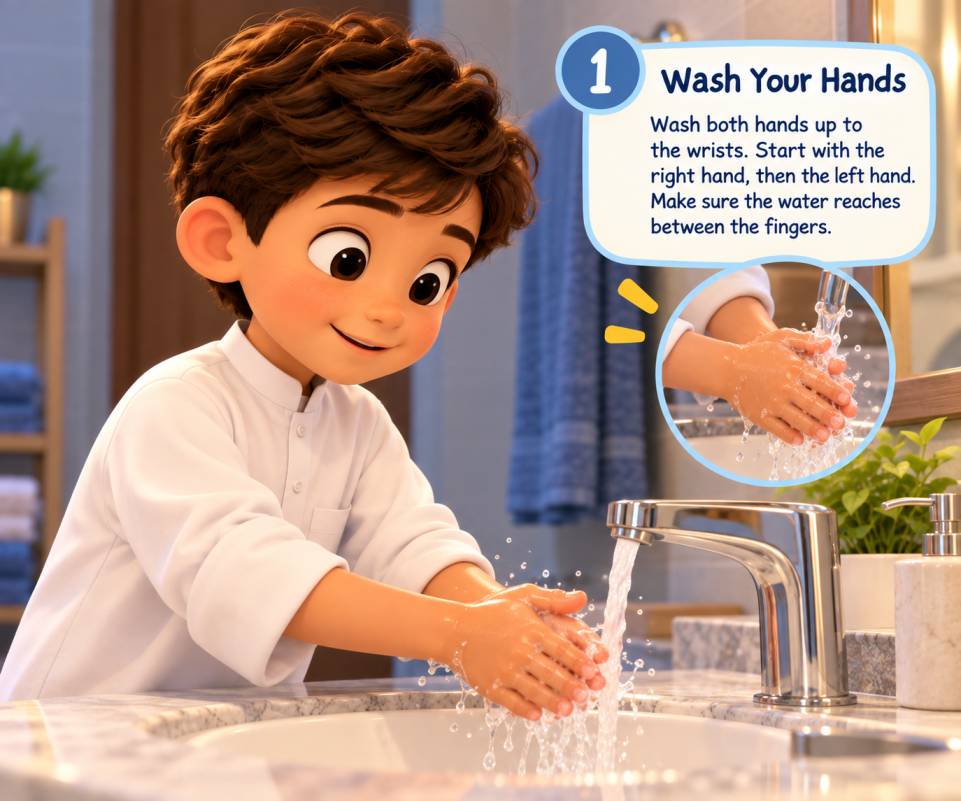
3. Wash Your Hands
Wash both hands up to the wrists.
MovementUse water to wash the right hand and then the left hand, making sure the water reaches between the fingers.
For your child“Make sure your whole hand gets wet.”
-
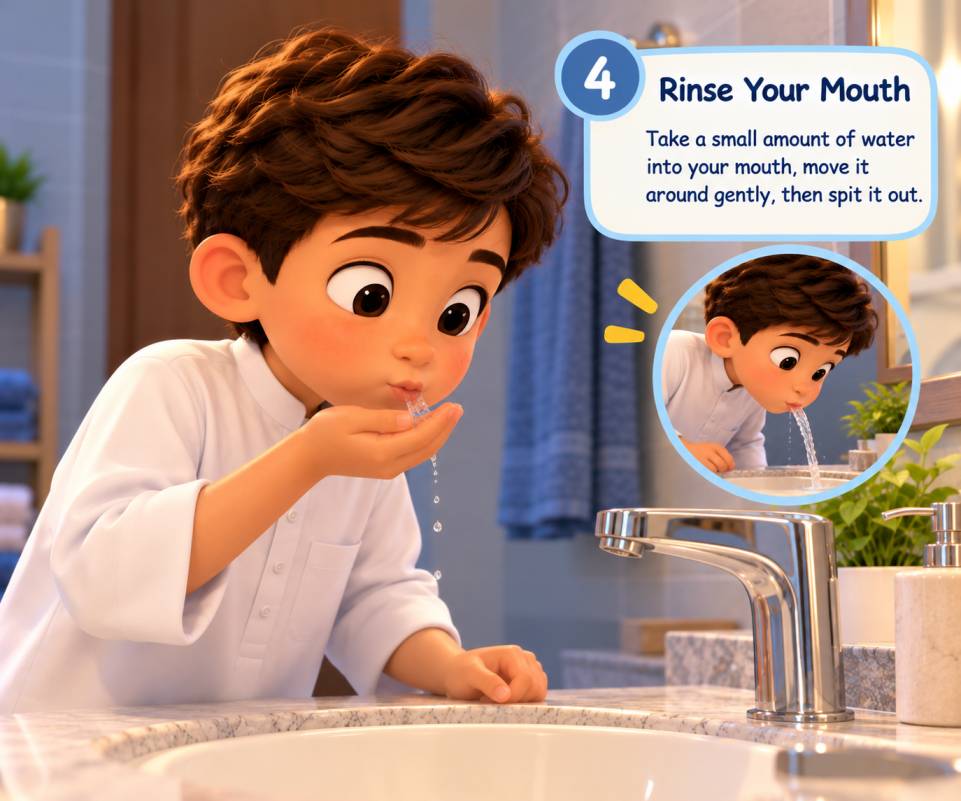
4. Rinse Your Mouth
Take water into your mouth and rinse it.
MovementGently move the water around the mouth, then spit it out.
For your child“Rinse your mouth gently, then spit the water out.”
-
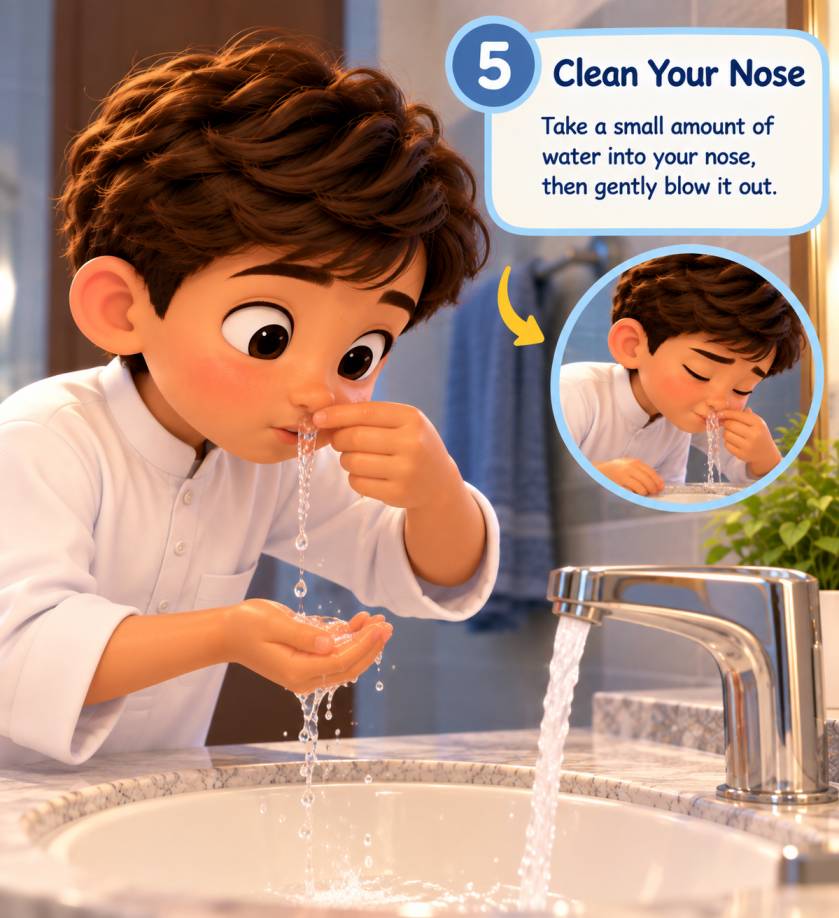
5. Clean Your Nose
Take a small amount of water into the nose and clean it.
MovementGently draw water into the nose and remove it.
For your child“Use only a small amount of water and be gentle.”
-
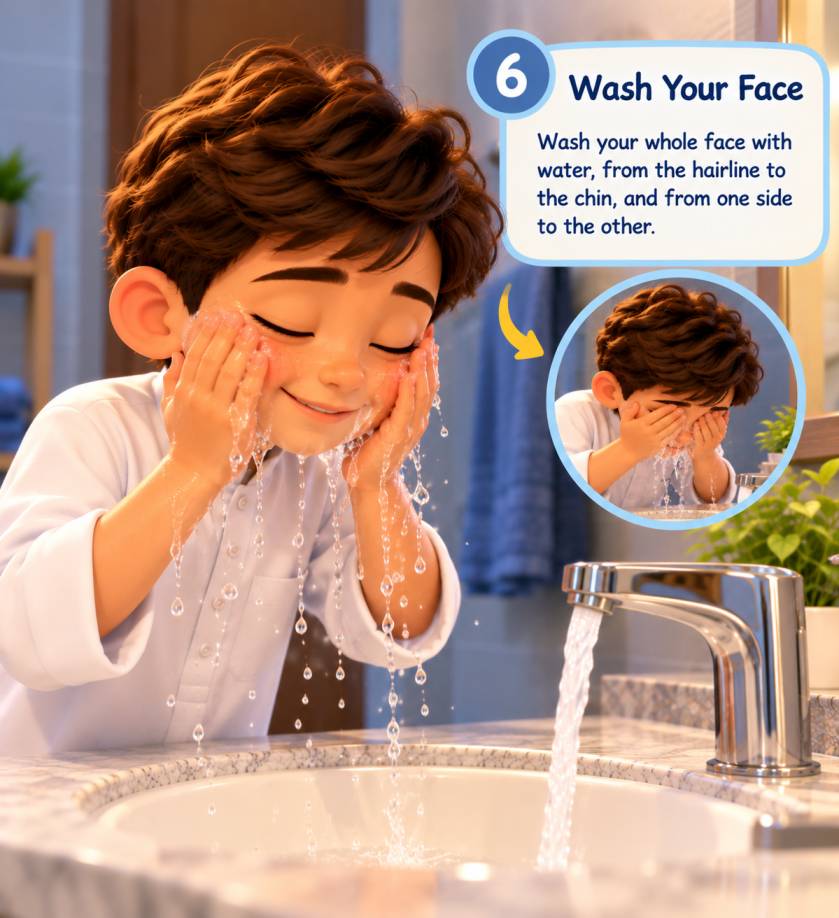
6. Wash Your Face
Wash the entire face.
MovementMake sure water reaches the face from the hairline to the chin and from one side of the face to the other.
For your child“Don’t forget the whole face.”
-
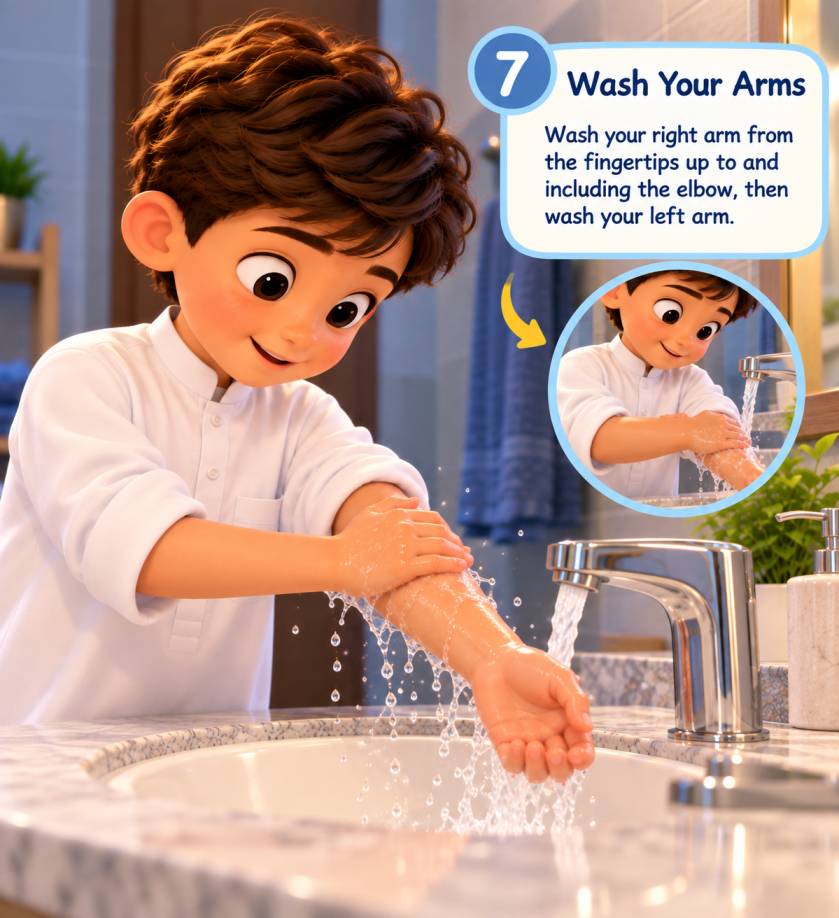
7. Wash Your Arms
Wash both arms, including the elbows.
MovementWash the right arm from the fingertips up to and including the elbow, then wash the left arm.
For your child“Make sure the water reaches your elbows.”
-
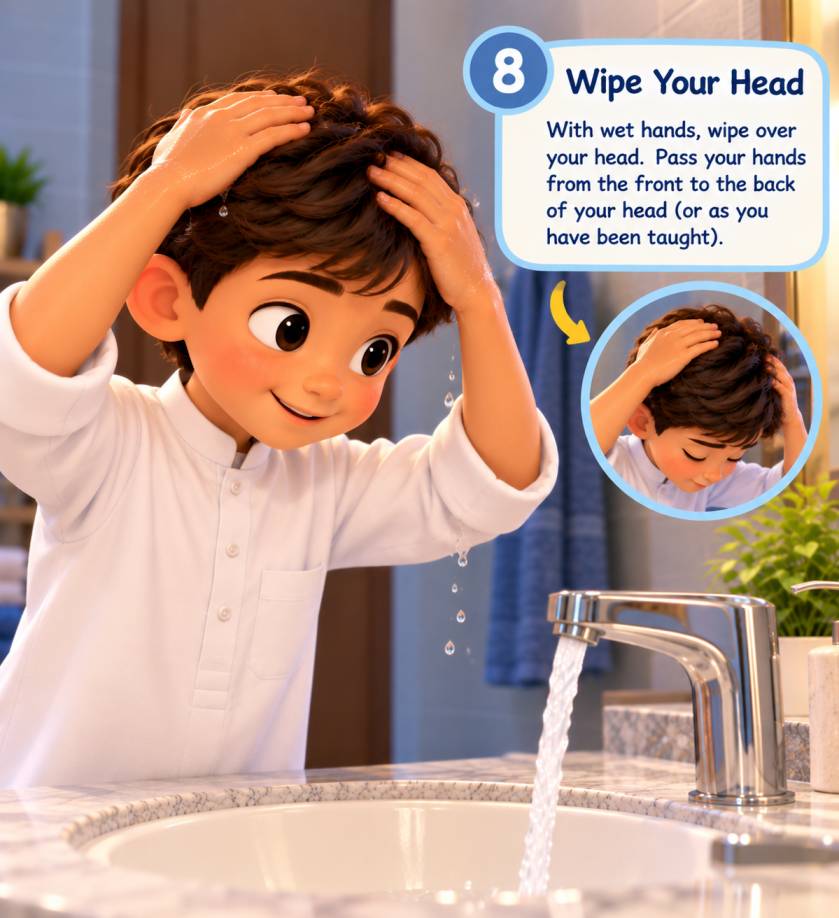
8. Wipe Your Head
Wipe over the head with wet hands.
MovementWet your hands and wipe over the head according to the method taught by your family or teacher.
For your child“We wipe the head; we don’t need to pour water over it.”
-
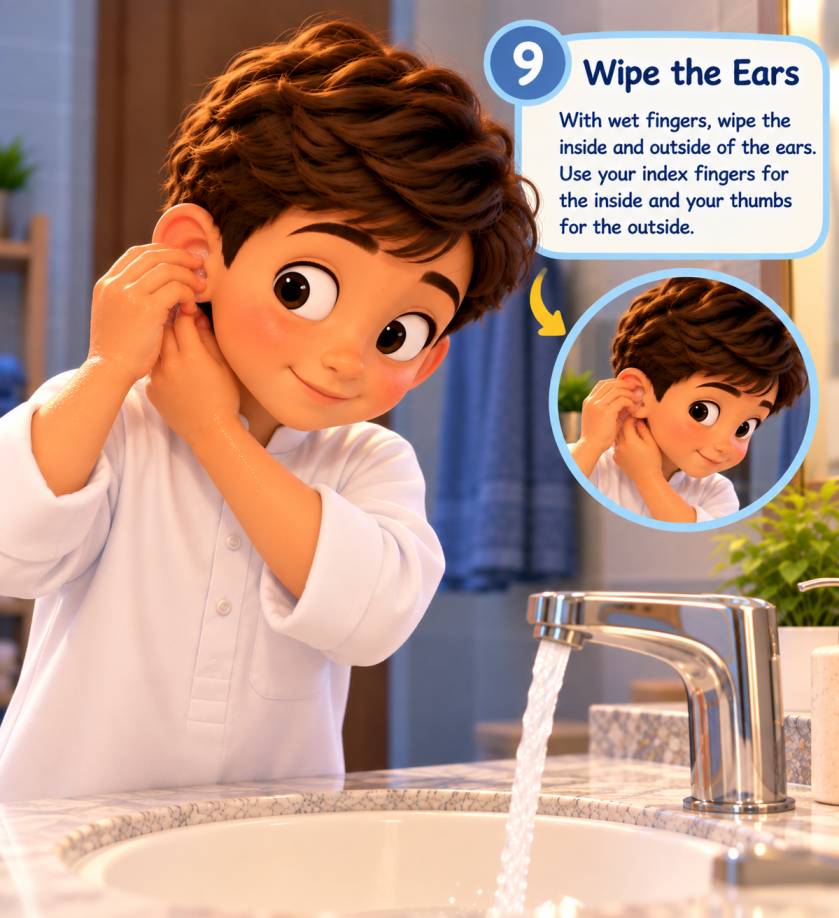
9. Wipe the Ears
Wipe the ears with wet fingers.
MovementGently wipe the inside and outside of the ears.
For your child“Be gentle around your ears.”
-
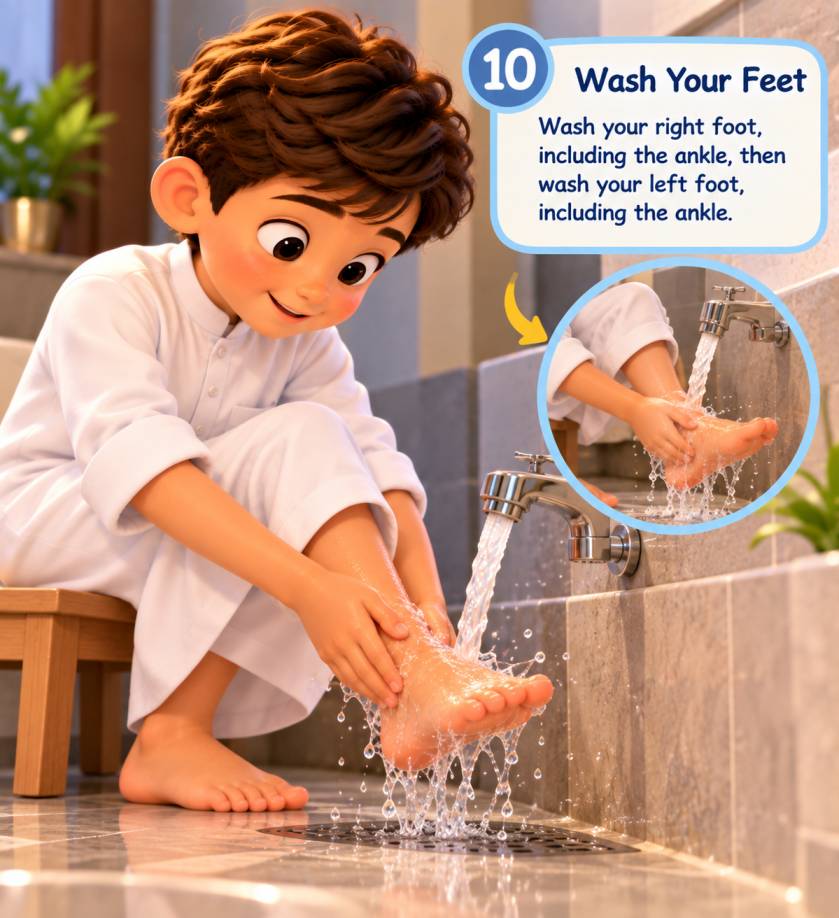
10. Wash Your Feet
Wash both feet, including the ankles.
MovementWash the right foot and then the left foot. Make sure water reaches the ankles and between the toes.
For your child“Don’t forget between your toes and around your ankles.”
Now Your Child Is Ready for Salah
Once your child has learned the Wudu steps, encourage them to practice regularly before Salah. When Wudu feels natural, move on to the prayer itself with our complete guide to teaching your child to pray, and use the illustrated step-by-step Salah guide to practice the positions together.
Remember: children learn Wudu through repetition. Don’t worry if they forget a step at first. Demonstrate it again, practice together, and gradually help your child perform Wudu independently.
A Simple Way to Remember Wudu
- Hands
- Mouth
- Nose
- Face
- Arms
- Head
- Ears
- Feet
Learning Wudu is not only about memorizing movements. It is about helping your child understand that Salah is an important part of our relationship with Allah, and Wudu is the preparation for it. For ways to nurture that connection, read how to make your child love Salah.
Questions Parents Ask About Teaching Wudu
At what age should my child start learning Wudu?
Many parents begin teaching Wudu gently between ages 5 and 7. The Prophet ﷺ instructed parents to teach children to pray at seven (Sunan Abu Dawud 495, graded hasan), and Wudu comes before prayer. Younger children can start by simply watching you and copying the movements.
How many times should each part be washed in Wudu?
Washing each part once is enough for a valid Wudu. The Prophet ﷺ performed Wudu washing each part once (Sahih al-Bukhari 157), twice (Sahih al-Bukhari 158), and three times (Sahih al-Bukhari 159). Many families start children with once and add the three-times Sunnah as they become confident.
What should I do if my child forgets a step?
Don’t worry. Children learn Wudu through repetition. Demonstrate the step again, practice together, and use the simple order Hands, Mouth, Nose, Face, Arms, Head, Ears, Feet until your child can perform Wudu independently.
What breaks Wudu?
Common things that break Wudu include using the toilet, passing wind, and deep sleep. Explain these simply so your child knows when to renew Wudu before Salah, and ask your child’s teacher about any details.
Let a Teacher Guide Your Child’s Wudu and Salah
Get your 2 free trial sessions and learn more about our Islamic Studies course, where Al-Azhar–qualified teachers practice Wudu and Salah with your child one-to-one.